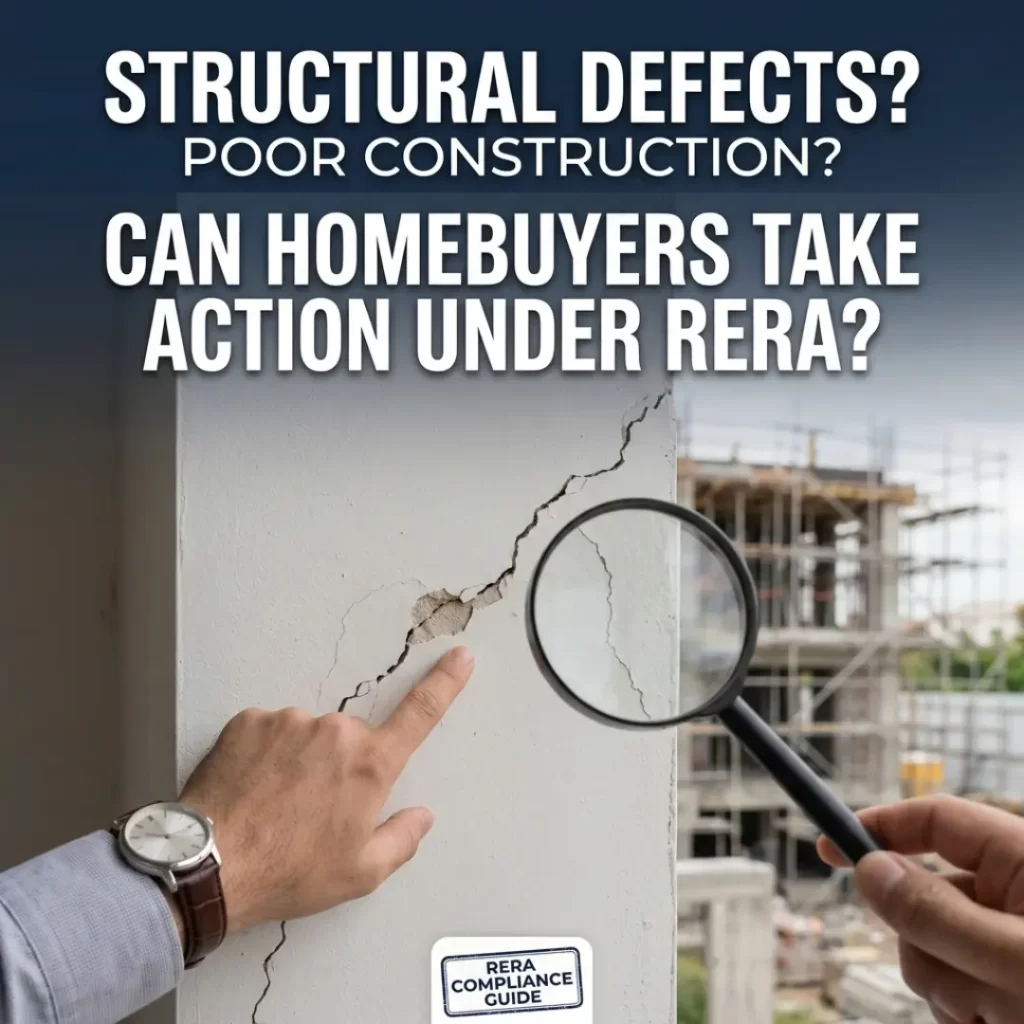
Owning a home is what many people dream about. You scrimp, you plan, you put your hopes into that single moment when you turn the key and step into your new place. But nothing bursts that dream faster than discovering cracks in the walls, a ceiling that leaks, or floors that slope where they shouldn’t. For years, Indian real estate was like the Wild West — buyers had little power, projects were delayed, construction was often shoddy, and developers called all the shots. Then came the Real Estate (Regulation and Development) Act, 2016, or RERA, and it turned the entire system on its head.
So, what do you do if your “brand-new” apartment or villa feels more like a patchwork job? Do homebuyers actually have a say if they spot structural issues or glaring construction flaws? Absolutely. RERA was designed specifically to force transparency and accountability into the process. The law arms you with the tools you need to actually defend your hard-earned investment.
Here at MNM Enterprises, we don’t shy away from this fact. We know that at the end of the day, a building is only as solid as the people behind it. We take pride in our work, but we also know not every developer shares our obsession with doing things right. That’s why it’s important to know what your rights look like under RERA, and how to actually make those rights work for you when needed.
Understanding What the Law Says: Your Rights Under RERA
Knowing your legal backing is key. RERA puts a lot of power back in the hands of buyers, and the rights enshrined in Section 18 of the Act are especially important. That section is known mostly for dealing with builder delays, but it also has a lesser-known but crucial part — it covers problems with the quality of construction.
If a developer can’t deliver what was promised — whether that means missing deadlines, building something with title defects, or turning over a home full of construction problems — the law says you have a right to compensation. You don’t have to just hope your builder “does the right thing” anymore. RERA means you’re entitled to a home built as per the plans, building codes, and your agreement. If a builder cuts corners, picks the cheapest materials, or hires workers who can’t do the job, you have a way to make it right.
Figuring Out the Actual Problem: Construction Defects and the RERA Definition
Before you run to the authorities, get clear on what you’re dealing with. Not every little scratch on a window is a reason to file a complaint. RERA focuses on defects that threaten the safety, durability, or livability of your home.
Here’s what typically falls under construction defects for RERA:
– Water seepage — leaks in the roof, walls, plumbing that mess up your interiors and invite mold.
– Poor finish — cheap or unsafe plumbing, bad wiring, uneven floors.
– Big changes from the approved plans — like cutting down on balcony size, changing layouts, or building extra floors with no permission.
– Missing promised amenities — no green space, clubhouse, or parking, even though you paid for them.
RERA steps in for problems that stem from bad workmanship. Some issues, like hairline cracks, might become visible after a few months (monsoon is usually the big reveal), but the idea is these faults were baked in from day one.
When It’s Serious: Structural Defects
Now, for the stuff that really keeps people up at night. Structural defects are a different beast — cracks in main supports, a shifting foundation that makes the whole building tilt, floors that slope, concrete that’s too weak (and yes, there are tests for this), or beams where the steel inside is rusting. These aren’t cosmetic issues. Fixing them isn’t just a quick patch; it’s often expensive, needs engineering know-how, and takes real time.
We, at MNM Enterprises, don’t take chances here. Our policy is to test every batch of material, check and double-check the basics, and invite outside experts to audit our work. But plenty of developers aren’t as careful, and that’s how you end up with these headaches.
How to Push Back: Filing a RERA Complaint for Poor Construction
So, you’re facing a serious defect. Now what? The RERA authorities won’t jump into action on rumors or just your word against the builder’s. You’ll need to collect real, clear evidence.
The must-haves:
– Your sale agreement — lists exactly what brands and grades of material were promised.
– Approved plans — line these up with your actual flat, spot and highlight differences.
– Photos and videos — wide shots and close-ups, whatever makes the problem obvious.
– Third-party audit — an independent engineer’s report, spelling out what’s wrong and which standards have been violated.
Putting this together is half the battle. A solid bundle of proof makes the authorities take your complaint seriously, and puts your developer on the back foot.
When the Problem Is Structural
If your home’s basic structure is in question, your complaint gets top billing. “Minor issues” just won’t cut it as a defense for the developer. Structural issues are a developer’s failure at a fundamental level. Tribunals have repeatedly ruled that developers must fix these at their own cost—and compensate for the stress, loss in property value, and time lost dealing with major defects.
Defect Liability: Your 5-Year Shield
One of the biggest wins from RERA is the defect liability period. Under Section 14(3), developers are responsible for fixing any structural or major construction issues brought to their attention within five years of you taking possession. And no, they can’t charge you extra for these repairs.
A few things to know:
– If it takes more than 30 days to fix the issue, the builder has to pay you compensation for the delay.
– You need to officially let the builder know (send an email or registered post) within five years if something comes up.
– If there’s no response, or you get an unsatisfactory one, you can head straight to the RERA tribunal.
Seeing the Bigger Picture: Other RERA Benefits
RERA does a lot more than help homeowners chase down incompetent builders. It insists all projects and agents register, forces developers to keep 70% of funds in an escrow account for actual construction, and demands detailed, regular updates be posted online — including exact carpet area, not inflated figures. That makes shadiness a lot harder and protects your interests much better.
How to File a RERA Complaint — Step by Step
Knowing your rights isn’t enough; you’ve got to use them. Here’s how the process usually works:
1. Start with a legal notice — tell your builder exactly what’s wrong, what clause they’ve violated, and give them up to 30 days to fix things.
2. Gather all necessary documents: your sales agreement, possession letter, legal notices, communication records, and that all-important independent engineering report.
3. Log on to your state’s RERA portal, fill out the online complaint form, upload your documents, and pay a small filing fee.
4. Show up for hearings — you and the builder will both get to speak, but your evidence, especially an independent expert’s findings, carries real weight.
5. Wait for the order — if the tribunal finds your claim valid, it can make the developer fix things, compensate you, or, in really bad situations, even refund your money with interest.
Working with the Right Builder Makes All the Difference
Of course, it’s always better to avoid these disputes in the first place. Pick the right builder, and you don’t spend five years chasing repairs. MNM Enterprises treats RERA not as a hoop to jump through, but as a validation of how we think construction should be done. Our own process: test every material, bring in outside auditors, communicate transparently, and offer support long after the handover — whether or not we’ve gotten a formal notice.
Real Courtroom Stories That Matter
Tribunals have backed buyers again and again:
– In one case, when columns started crumbling, a tribunal made the builder demolish and rebuild them, plus pay for the lost time.
– With major water leaks, the tribunal has forced developers to redo entire waterproofing systems, not just patch them.
– Where developers secretly changed layouts or shrank balconies, the ruling went in favor of buyers every time.
Myths, Debunked
– RERA isn’t just about late delivery. It covers structural and quality defects too.
– Taking possession doesn’t make you lose your rights. The defect liability period starts once you move in.
– Even problems with plumbing or other “minor” things, if systemic, fall under RERA’s protection.
– RERA cases don’t drag for years. Most decisions take a few months — nobody waits decades for justice anymore.
Your Takeaway
So, can you take action against construction flaws and serious defects under RERA? Yes, you really can — and these aren’t hollow promises. Armed with this law, and by paying attention to your rights, you’re not just fighting for yourself, you’re raising the standards for everyone who comes after.
Still, the best solution is a home built right from day one. At MNM Enterprises, that’s the only kind of home we aim to deliver. Choose a developer you trust, but know exactly how RERA backs you up — because your peace of mind is what turns a “house” into a true home.
For More Visit: https://mnmenterprises.ltd/
For Looking to buy a Flat contact us now: www.globesproperties.com