Author name: Aishwarya Nagraj

Construction quote analysis by MNM Enterprises showing hidden costs in low-cost building estimates

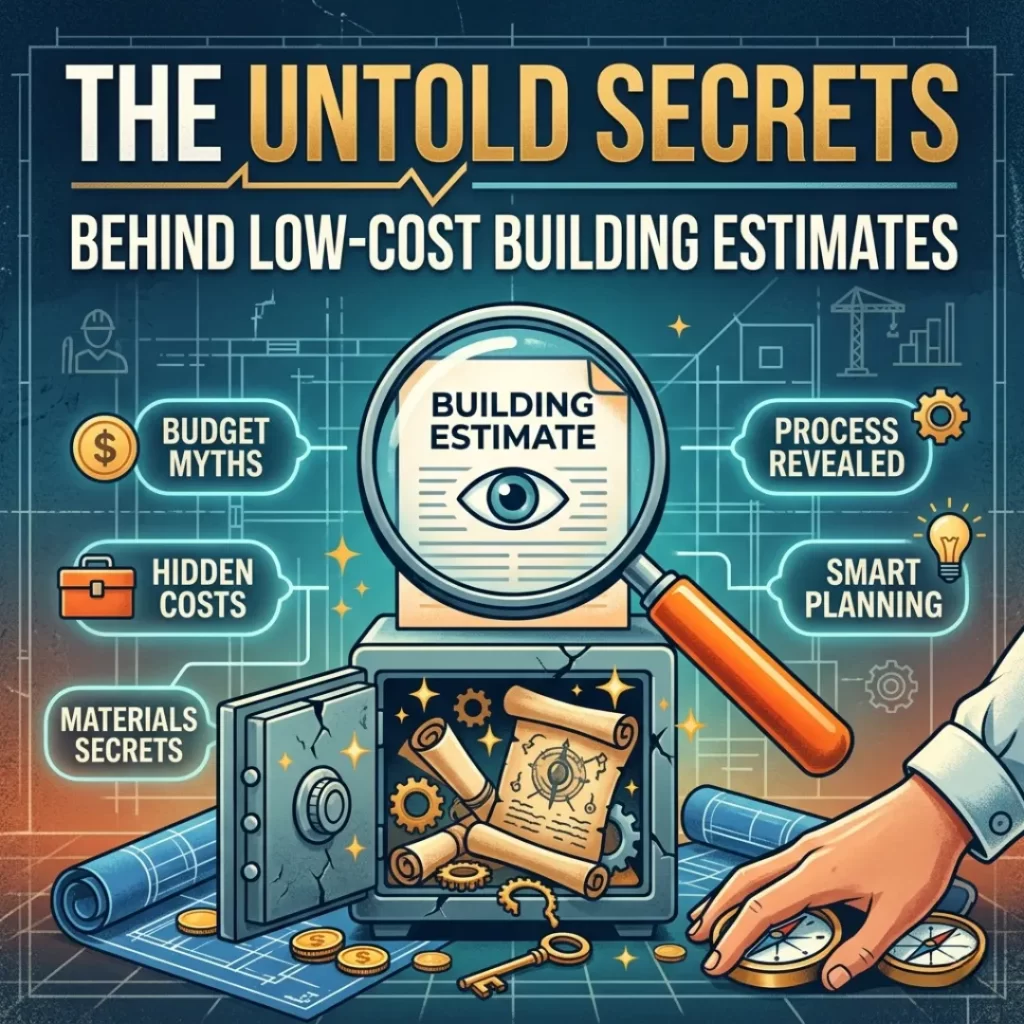
The Untold Secrets Behind Low-Cost Building Estimates

Building your own home is supposed to be one of the most thrilling journeys of your life. You have spent years picturing the layout, the cozy evenings, and the sense of ownership. But then reality hits: the budget. Suddenly, you start collecting estimates, and you find yourself staring at wildly different numbers. One quote feels astronomical, another reasonable, and then there is that magical, incredibly low number. It feels like a dream come true. However, let me tell you: if a deal seems too good to be true, it almost always is. To protect your hard-earned money and your dream, you must learn the art of construction quote analysis. It is not just about looking at the final number; rather, it is about dissecting how that number was calculated. Let us pull back the curtain and expose the hidden truths of the construction bidding world. The Irresistible Lure of Cheap Builder Quotes Why do we fall for cheap builder quotes? It comes down to simple human psychology. Building a home is a massive financial undertaking. When a contractor presents a price that is thirty or forty percent lower than the competition, our brains desperately want to believe it is possible. We convince ourselves that the other guys are just greedy, or that this particular builder has some magical way of sourcing materials for pennies. The Psychological Trap of Low Bidding We all want to save money, and there is no shame in that. However, in the construction industry, a drastically low bid is rarely a bargain. Instead, it is a strategic move. The contractor knows that once you sign the contract, switching builders becomes incredibly difficult and expensive. You are essentially locked in. Therefore, they only need to get their foot in the door. Once that signature is on the paper, the real billing begins. The Myth of the “Efficient” Builder Sometimes, a low bidder will claim they have special supplier relationships or streamlined processes allowing them to build for less. While efficiency does play a role in pricing, no builder can defy the laws of economics. Lumber, concrete, and skilled labor cost what they cost. If a builder is significantly cheaper, they are cutting corners somewhere. You just might not see where until it is too late. Unmasking Contractor Pricing Tricks in Construction Estimates Let us talk about the dark arts of the industry. There are several contractor pricing tricks that unethical builders use to make their estimates look incredibly attractive. Understanding these tactics is your best defense against a financial nightmare. The “Allowance” Illusion in Home Building Costs One of the most common tricks involves playing the “allowance” game. In a construction estimate, an allowance is a placeholder for the cost of materials or fixtures that you have not picked out yet. A shady contractor will put down absurdly low allowances. For example, they might allocate $1,000 for kitchen cabinets, knowing full well that the cabinets you actually want will cost $8,000. When you eventually select your finishes, you are hit with the difference, causing your home building costs to skyrocket. Vague Scope of Work: A Building Quotation Guide Red Flag Another classic move is presenting a vague scope of work. They will list “Electrical Work: $5,000” without detailing what that includes. Does it cover the light fixtures? The panel upgrade? The outdoor outlets? Without specifics, the contractor can interpret the scope as narrowly as they want. Ask for something you assumed was included, and they hit you with a change order. Any reliable building quotation guide will tell you that vague line items are a massive red flag. Omitting Essential Phases to Skew Residential Construction Pricing Perhaps the most dangerous trick is simply leaving things out. They might intentionally omit site preparation, grading, or permit fees from the initial bid to skew the residential construction pricing in their favor. You assume these are bundled in, but they are not. Once the project starts, you have no choice but to pay for these essential tasks. It is a classic bait-and-switch that catches many homeowners off guard. The Danger Zone: Low Price Contractor Risks You might be thinking, “Even if the price goes up a little, at least I am getting a good deal initially.” That is a dangerous gamble. The low price contractor risks go far beyond just financial surprises. The Quality Compromise of Cheap Builder Quotes If a contractor has underbid the project, they have to cut costs somewhere to make a profit. Where do they cut? Usually in the places you cannot see. They will use cheaper lumber that warps, inferior concrete that cracks, or unskilled laborers who make costly mistakes. The structural integrity of your home is at stake. Cheap builder quotes almost always result in cheap building quality. The Abandonment Risk During Estimate vs Actual Construction Cost When a contractor realizes they are losing money on a severely underbid project, they often do the unthinkable: they walk away. Your site sits abandoned for weeks or months. You are left with a half-finished shell, forced to find another builder who will now charge you a premium to fix the mess and finish the job. This drastically widens the gap between your estimate vs actual construction cost. The Slow Bleed of Hidden Fees in Construction Then there are the hidden fees in construction. These are the charges that magically appear once you are locked into a contract. Suddenly, you face “administrative fees,” “material storage fees,” or exorbitant charges for minor changes. Because you are already emotionally and financially committed, you end up paying them. Performing a rigorous construction quote analysis before signing is the only way to spot the red flags that lead to these predatory fees. The Grand Illusion: Estimate vs Actual Construction Cost If there is one concept you must burn into your memory, it is the gap between estimate vs actual construction cost. An estimate is exactly what it sounds like—an educated guess. However, a low-ball estimate is not a guess; it

The Untold Secrets Behind Low-Cost Building Estimates Read More »

Residential plot rules Karnataka update for 30x40 and 40x60 plots by MNM Enterprises

Karnataka Homeowners Get Relief as OC Requirement Removed for 30×40 & 40×60 Plots

Let’s talk about that headline: “No Occupancy Certificate for 30×40 & 40×60 Plots in Karnataka: Latest 2026 Update.” If you own land, this news probably shocked you. For years, the Occupancy Certificate (OC) caused massive headaches. You could build a perfect home, but without this paper, the municipal corporation considered it illegal. Now, the state government is changing the game. Understanding the current Residential plot rules Karnataka is absolutely vital for anyone planning to build. This shift completely changes how we approach construction. At MNM Enterprises, we help you navigate these changes effortlessly. Breaking Down the No OC Rule for 30×40 and 40×60 Plots What does this title actually mean for you? When you read “No occupancy certificate for 30×40 plots” and “No occupancy certificate for 40×60 plots,” it sounds like a dream come true. Does it mean you can build whatever you want? Absolutely not. That is a dangerous misconception. It actually signals a massive reduction in bureaucratic red tape. The 30×40 site (1,200 square feet) and the 40×60 site (2,400 square feet) form the backbone of urban housing. These dimensions dominate layouts in Bangalore, Mysore, and Hubli-Dharwad. Previously, obtaining an OC for these plot sizes drained homeowners of money and time. People spent lakhs of rupees and waited years for final clearance. The government realized that penalizing a modest duplex with the same stringent rules as a massive commercial complex was unfair. Therefore, necessity drove the creation of the Karnataka OC exemption update. Why the Karnataka Property Law Update Matters Why are people celebrating this news? You must understand the trauma of the old system to appreciate the new one. The previous Occupancy certificate rules Karnataka heavily favored large developers and punished individual homeowners. Imagine this scenario. You buy a 30×40 plot. You hire an architect, sanction your plan, and build a beautiful home. During construction, a municipal inspector drops by. They notice your balcony extends six inches beyond the plan. Boom. They flag your file. Upon completion, you apply for the OC, and the authorities reject you. Without an OC, you cannot secure a legal water connection. You cannot get a proper sanitary connection. Worst of all, you cannot sell the property easily. Banks refuse loans to prospective buyers. You find yourself stuck with an illegal asset. The old Residential plot rules Karnataka inadvertently created a system that punished minor, harmless deviations with extreme severity. Decoding the Karnataka Building Rules 2026 What exactly does the Karnataka building rules 2026 bring to the table? The government essentially drew a line in the sand. They recognized that enforcing a full-fledged OC for smaller plots was practically impossible and economically burdensome. Under the new framework, the phrase OC not required Karnataka becomes a reality, but with crucial caveats. This is not a free pass to violate building bylaws. The government sends a clear message. If you adhere strictly to the sanctioned plan, you do not need to apply for that agonizing OC. You must maintain the prescribed setbacks. You must not exceed the Floor Area Ratio (FAR). You must stick to the allowed number of floors. Typically, authorities allow G+2 or G+3 depending on road width. If you follow these rules, the municipal corporation considers your building fit for occupation by default. This Karnataka property law update is monumental because it shifts the burden of proof. Previously, authorities considered you guilty of illegal construction until you proved your innocence by obtaining an OC. Now, if you build within the rules, the law considers you compliant automatically. However, if you blatantly violate the sanctioned plan, you face severe consequences. Building an extra floor or encroaching on the road gives the municipal corporation full power to demolish the structure. The exemption rewards compliance; it does not license chaos. Staying Compliant with Karnataka Urban Development Rules Let’s dive into the fine print. Whenever the government announces a major policy shift, the details matter most. The Karnataka urban development rules dictate that this exemption applies strictly to residential buildings on these smaller plots. If you decide to run a commercial establishment on a 40×60 plot, the rules change entirely. A large supermarket or a function hall still requires an OC, fire safety clearances, and a host of other NOCs. Furthermore, the exemption ties directly to the concept of “setbacks.” A setback is the empty space you leave around your building. On a 30×40 plot, leaving the mandated setbacks feels like giving away too much land. Many homeowners illegally built right up to the boundary wall. This action automatically disqualified them from getting an OC. Under the new Residential plot rules Karnataka, you must religiously adhere to setback rules to enjoy the OC exemption. If you ignore setbacks, you return to square one. You will find yourself begging the municipal corporation for a regularisation certificate. That process brings its own unique pain. The government also pushes for better documentation. While you might not need the OC, the “Completion Certificate” issued by your architect becomes paramount. This document certifies that the builder constructed the building exactly as per the sanctioned plan. The government removed the bureaucratic monster of the OC, but they placed the responsibility of compliance squarely on the homeowner and their construction team. Middle-Class Relief: Karnataka Housing Policy Changes Think about the average IT professional or a small business owner in Bangalore. They save for a decade to buy a 30×40 plot in the outskirts. Maybe they choose Devanahalli, Hoskote, or an area along Mysore road. Every single rupee counts. Under the old regime, obtaining an OC cost a fortune. Official fees combined with unofficial “speed money” could run into lakhs. It hit them as an unexpected, crushing expense right at the finish line. The removal of this requirement under the current Residential plot rules Karnataka puts money back into the pockets of the middle class. It also drastically reduces the timeline for moving into a new home. Previously, families waited six months to a year after construction just to get the OC.

Karnataka Homeowners Get Relief as OC Requirement Removed for 30×40 & 40×60 Plots Read More »

Bengaluru building plan approvals through new digital platform by MNM Enterprises for construction projects

Bengaluru Introduces a Single Platform for Building Plan Approvals

If you have ever tried to build a house in Bengaluru, you know the dread that comes with the paperwork. For decades, the phrase “building permissions” sent shivers down the spines of homeowners and developers alike. Previously, it meant endless cups of chai at government offices. Furthermore, chasing clerks for signatures was a daily routine. Ultimately, you had to figure out exactly which department needed what stamp on which day. But the landscape is finally shifting. Consequently, in a move that is being hailed as a game-changer, Bengaluru introduces a single platform for building plan approvals. Frankly, it is about time. Indeed, this transition from a fragmented, paper-heavy nightmare to a streamlined, digital ecosystem is a fundamental shift. It changes how the city will grow. Therefore, for anyone involved in construction, understanding the new Bengaluru building plan approvals process is essential. Let us dive into what this means for you. The Dark Ages of Construction Approvals To appreciate the new system, we must talk about the old way. Admittedly, if you were not familiar with the old Bengaluru construction approval process, consider yourself lucky. Getting a plan sanctioned meant navigating a labyrinth of different agencies. Specifically, you needed clearances from the BBMP, BDA, BWSSB, Fire Department, and Traffic Police. Sometimes, you even needed the Airports Authority of India. The Frustration of Siloed Departments Each department operated in its own silo. For instance, you would submit a set of physical blueprints to one office. After that, you waited weeks for a query. Next, you went back to correct a single line before resubmitting. Meanwhile, your construction loan disbursements were delayed. Additionally, inflation was eating into your budget. As a result, the old building permission system Bengaluru was completely opaque. Consequently, you never really knew where your file was. Furthermore, you did not know who was sitting on it. Ultimately, you had no idea what the actual timeline was. Naturally, it bred frustration, delays, and opportunities for middlemen. Enter the Single Window Building Approval System The government realized Bengaluru needed a tech-driven process. After all, it could not have a third-world approval system in India’s tech capital. Thus, the single window building approval system was born. Imagine this scenario. Instead of running to five different offices, you log into one centralized portal. The Core of the Digital Shift First, you upload your digital drawings. Then, you fill out a unified application form. Finally, you pay your fees online. From that moment on, your application is routed automatically to all required departments. Importantly, they review it concurrently, not sequentially. Moreover, you can track your application status in real-time. Consequently, you can see exactly which department has approved it. Similarly, you can see which one has raised an objection. This is the core of the online building plan approval Bengaluru. Clearly, it takes the process out of dusty filing cabinets and puts it into the cloud. Therefore, the introduction of this smart approval system Bengaluru is a massive leap toward transparency. Undeniably, it is a huge win for efficiency. Overall, this building approval platform Bengaluru changes everything. How the New Platform Actually Works So, how does this building clearance platform Bengaluru function under the hood? Admittedly, the user interface is simple. However, the backend integration is incredibly complex. Specifically, it connects various civic bodies onto a single tech stack. Unified Registration First, you no longer need separate logins for the BBMP, BDA, and BWSSB. Instead, a single registration on the portal gives you access to everything. Certainly, this is the first step in demystifying the process. Consequently, it simplifies Bengaluru building plan approvals from day one. Auto-Scrutiny of Plans Undoubtedly, one of the most exciting features is the auto-scrutiny tool. When you upload your digital drawings, the software checks them automatically. For example, it checks against prevailing zoning regulations. Additionally, it verifies setback requirements. Furthermore, it evaluates Floor Area Ratio limits. If your building violates a setback rule, the system flags it immediately. Thus, no more waiting three weeks for a human draftsman to point out an error. Consequently, this makes digital building approvals Bengaluru incredibly fast. Integrated Clearances Whether you apply under BBMP building plan approval or the BDA, the portal handles the routing. Automatically, it sends the relevant sections to the fire department. Meanwhile, it routes them to BWSSB for water approvals. Simultaneously, it delivers them to the town planning department. Hence, this creates truly unified online construction approvals. Real-Time Tracking and Digital Sanction Fortunately, the anxiety of the unknown is eliminated. Now, you will receive SMS and email alerts every time your file moves. Moreover, you can see a dashboard showing your timeline. Once all departments give the green light, you do not collect a physical letter. Instead, the Bengaluru building sanction process now culminates in a digitally signed PDF. Consequently, this document serves as your official building permit. Finally, you print it out and display it at your construction site. The Impact on Real Estate and Individual Builders Undeniably, the shift to a building permit approval Bengaluru system has profound implications. Specifically, it affects the entire real estate ecosystem. Furthermore, it changes how individuals and large developers approach their projects. Benefits for Individual Homeowners If you are building your own home, time is money. For instance, delays in construction plan approval Karnataka mean you pay rent at your current place. Meanwhile, you also pay interest on your construction loan simultaneously. Fortunately, the new platform drastically reduces the timeline. Specifically, it goes from several months to just a few weeks. Moreover, it puts the power back in your hands. As a result, you can manage the process without relying on shady agents. Advantages for Developers Conversely, for large developers, speed to market is critical. When approvals take a year, projects stall. Subsequently, costs escalate, and homebuyers suffer. Therefore, streamlined real estate approvals Bengaluru mean developers can launch projects faster. Consequently, this leads to a healthier supply of housing in the market. Ultimately, this efficiency could eventually help stabilize property prices,

Bengaluru Introduces a Single Platform for Building Plan Approvals Read More »

Bengaluru building objections raised on proposal easing building violation limits in Bengaluru - MNM Enterprises

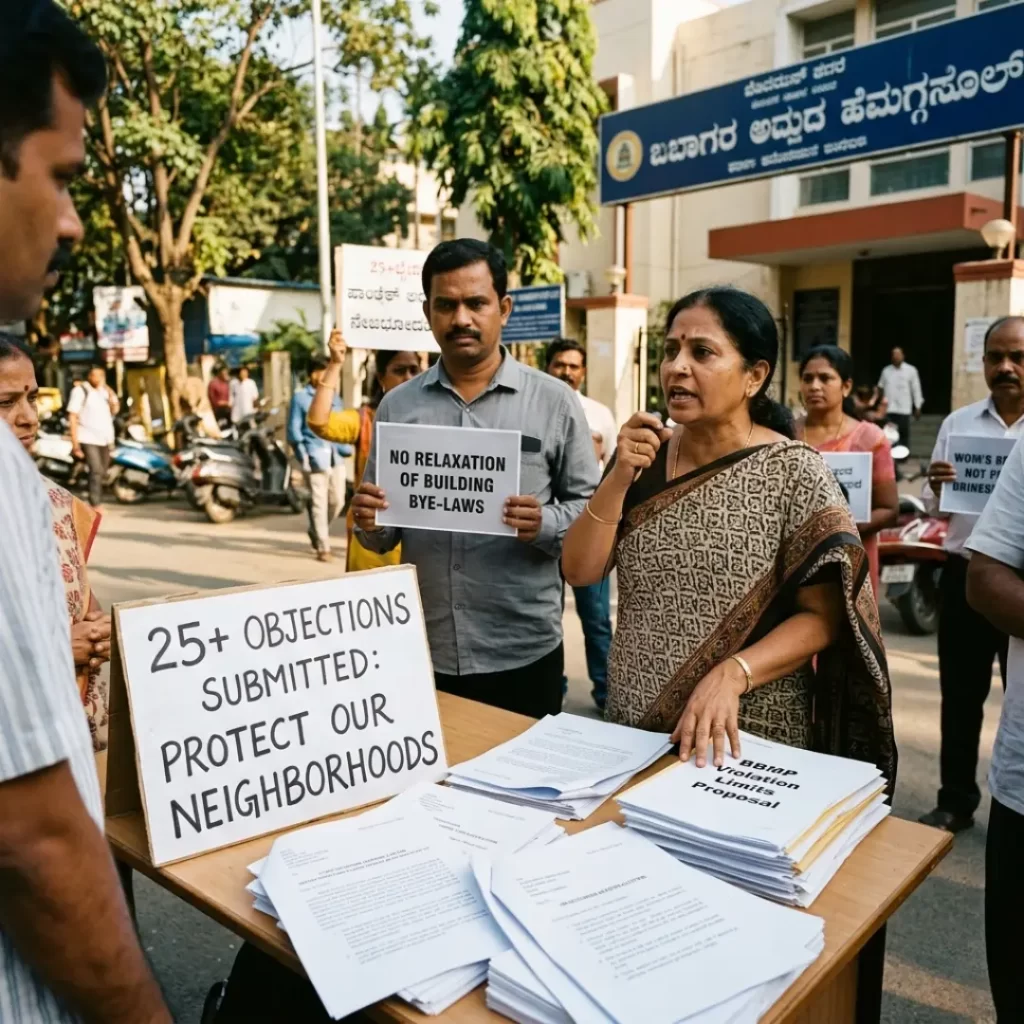
25 objections submitted over proposal to ease building violation limits in Bengaluru

If you have ever tried to build a house, renovate a property, or even just get a basic plan sanctioned in Bengaluru, you know it presents an exhausting obstacle course. The city’s growth has been explosive, but the rules governing that expansion have often lagged behind, creating a chaotic mess for homeowners, builders, and the authorities alike. Recently, a new proposal aimed at easing the strict penalties and limits on building deviations made headlines, but it didn’t exactly receive a warm welcome. In fact, citizens submitted 25 objections over a proposal to ease building violation limits in Bengaluru. At first glance, 25 objections might not sound like a massive public uprising. But in the context of urban planning policies, where authorities often push changes through with little public debate, these 25 submissions represent a deep-rooted frustration. They act as a warning shot from residents, urban planners, and civic activists who are tired of watching the city’s livability crumble, one illegal floor at a time. Here at MNM Enterprises, we have navigated the construction landscape of this city for years. Our team has handled the confusing maze of approvals, dealt with the ever-changing policies, and seen firsthand how these rules impact real people trying to build their dream homes. As a construction company that believes in doing things the right way, we understand the temptation to ease the rules—building legally in Bengaluru is tough. However, we also understand the catastrophic long-term consequences of normalizing deviations. Let’s dive deep into what these 25 Bengaluru building objections actually mean, why the government wants to change the rules, and how this affects anyone looking to build in the city today. Understanding the Core of the Proposal To understand the pushback, we first need to examine the proposal itself. The Bruhat Bengaluru Mahanagara Palike (BBMP) suggested relaxing the limits on building violations. Currently, if a building deviates from the sanctioned plan—say, by building too close to the boundary wall or adding extra floor area ratio (FAR) beyond what authorities permit—the law strictly penalizes the violators. In many cases, severe deviations trigger demolition notices. The proposal for easing building violation limits Bengaluru stems from pragmatism. Officials point out that a vast majority of buildings in the city have some level of deviation. If the BBMP strictly enforced demolition on all these structures, authorities would tear down half the city. By easing the limits, the government hopes to bring these deviated buildings into the legal fold, collect hefty penalties to fill the civic coffers, and provide relief to thousands of middle-class homeowners who might otherwise lose their homes. However, this is exactly where the Bengaluru construction regulation changes hit a wall of resistance. Objectors argue that easing limits does not solve the problem; it surrenders to it. This approach sends a dangerous message: build illegally now, pay a fine later, and your building will remain safe. The Anatomy of the 25 Objections Who submitted these objections, and what exactly do they say? The 25 objections came from a mix of Resident Welfare Associations (RWAs), urban planning experts, environmental activists, and concerned citizens. These groups have studied the fine print, and their concerns go far beyond simple rule-breaking. Safety remains the primary driver behind these BBMP building bylaw amendment objections. When a builder violates setback rules, they essentially steal the space meant for light, air, and emergency access. In a dense urban environment like Bengaluru, where parked cars and cables already choke narrow lanes, reducing the mandatory setbacks makes the area practically impassable for fire trucks or ambulances. Imagine a fire breaking out in a densely packed residential area where buildings leave barely a few feet of space. Fire engines simply cannot enter, turning a manageable emergency into a devastating tragedy. Then comes the issue of structural load. Adding extra floors without proper sanctions puts immense stress on the building’s foundation, which engineers designed for a specific load. This isn’t just a bureaucratic violation; it creates a life-threatening hazard. Soil conditions vary drastically across the city, and constructing beyond the permitted FAR without evaluating the soil’s load-bearing capacity invites catastrophic collapses. By submitting these Bengaluru building objections, citizens point out that the city cannot afford to compromise on basic safety parameters just because enforcing the law inconveniences the authorities. Analyzing these Bengaluru building objections reveals a city at a crossroads, forcing a choice between short-term political appeasement and long-term urban survival. The “Regularization” Trap: A Failed History To grasp the current pushback, we must look at the past. Karnataka has a long history of trying to regularize illegal buildings through schemes like Akrama-Sakrama. The idea always revolves around levying a penalty, legalizing the deviation, and moving on. Yet, the building regularization policy Karnataka has tried to implement in the past has failed massively. Why? Because it fundamentally violates the principles of natural justice. Why should someone who followed the rules, built within setbacks, and paid for legally permitted FAR receive the same treatment as someone who flouted the rules, maximized their plot coverage, and then simply paid a penalty? Often, the penalty represents just a fraction of the profit the builder makes by selling the extra, illegally built floor space. It doesn’t deter anyone; it just adds a minor cost of doing business. The 25 objectors heavily lean on this historical failure. They argue that tweaking the building violation rules in Bengaluru to allow more deviations will just lead to another failed Akrama-Sakrama scheme, where the system punishes the honest taxpayer and rewards the violator. If the government sets a precedent that laws are merely suggestions negotiable for a price, respect for all civic rules gradually erodes. The Impact on Honest Homeowners and Builders As a company that prides itself on ethical construction, MNM Enterprises feels the sting of these policies acutely. When clients approach us, they frequently ask why we cannot just “adjust” the boundary wall a little bit or “squeeze in” an extra room. They watch their neighbors doing it without consequence, and they feel

25 objections submitted over proposal to ease building violation limits in Bengaluru Read More »

Karnataka High Court e-Khata rules in Karnataka guidelines for property registration

Karnataka High Court Sets Guidelines for E-Khata Issuance to Implement Civil Court Decrees

Imagine fighting a brutal, exhausting legal battle over your property. You spend years navigating the complex Indian judicial system. You hire lawyers, attend countless hearings, and endure endless stress. Finally, the judge rules in your favor. The civil court issues a decree confirming your absolute ownership. You breathe a massive sigh of relief, thinking the nightmare is over. But then, you approach the local municipal office to update your property records, and you hit a brick wall. The bureaucrats demand a whole new set of proofs, dragging you back into an administrative nightmare. This frustrating scenario was the harsh reality for many property owners in the state. However, a recent judicial intervention has changed the game entirely. The recent headline, “Karnataka High Court Sets Guidelines for E-Khata Issuance to Implement Civil Court Decrees,” brings incredible relief to property owners. This landmark ruling bridges the critical gap between winning a court case and actually securing your digital property records. Let us dive deep into this judgment, understand the updated e-Khata rules in Karnataka, and explore what it means for you. We will also discuss how securing your property records is the vital first step before building your dream home with trusted partners like MNM Enterprises. The Core Issue: When Court Victories Met Bureaucratic Hurdles To truly appreciate the significance of this ruling, we must understand the historical context. In Karnataka, an e-Khata is the ultimate digital proof of property ownership. It records vital details about the property, its dimensions, and its rightful owner. Without it, you essentially exist in a legal limbo. You cannot sell the property easily, you cannot secure a loan against it, and you certainly cannot get a building permit to construct a home. Previously, a massive disconnect existed between the judiciary and the revenue departments. If a civil court declared you the owner of a disputed property, you would take that court decree to the municipal office. Instead of simply updating the records, local authorities often treated the court decree as just another document. They would initiate their own prolonged inquiry, asking you to prove your claim all over again. They would demand missing link documents, old tax receipts, and lineage records. Sometimes, they would even issue public notices inviting objections, effectively reopening a case you had already won in a court of law. This blatant overreach delayed justice and harassed genuine property owners. The e-Khata rules in Karnataka lacked a clear, mandatory directive forcing local bodies to respect and implement civil court decrees promptly. Consequently, the civil court decree enforcement Karnataka process remained broken for years. People had the paper victory, but they lacked the digital recognition of their ownership. The High Court Steps In: A Landmark Intervention Frustrated by this systemic apathy, petitioners approached the High Court. They argued that forcing them to prove their ownership again, after a competent civil court had already decreed it, amounted to contempt of court and a violation of their fundamental rights. The Karnataka High Court strongly agreed. According to recent Karnataka High Court judgment updates, the Court firmly stated that a civil court decree is not merely a piece of paper. It is a binding declaration of title. Once a court decides who owns a property, the revenue and municipal authorities have no business re-adjudicating the matter. The Court laid down strict property e-Khata guidelines directing local bodies to implement these decrees without unnecessary delays or redundant inquiries. This ruling fundamentally reshapes the e-Khata issuance process Karnataka. The judges made it crystal clear that the revenue department’s role is purely ministerial in these cases. They must simply verify the court decree, ensure it is final and not under a stay, and update the digital records accordingly. This intervention streamlines the civil court order implementation significantly. It strips local bureaucrats of their arbitrary power to harass citizens with endless documentation requests after a court has already settled the dispute. Decoding the New Guidelines: What Property Owners Need to Know So, what do these new e-Khata rules in Karnataka actually mean for you? If you have won a property dispute, here is how the updated system protects you: 1. No Re-Adjudication: Municipal corporations and panchayats cannot conduct their own inquiry into the title of the property if a civil court has already decided it. They must accept the court’s finding as the absolute truth. 2. Ministerial Action Only: The process of updating the Khata and issuing the digital version is now strictly a ministerial act. This means the authorities must perform it as a routine administrative duty, without exercising their own discretion or judgment on the merits of the case. 3. Time-Bound Process: The High Court emphasized that authorities must process these applications swiftly. Unnecessary delays will not be tolerated, and officials can face contempt charges for failing to comply with court decrees. 4. Simplified Documentation: While you still need to submit the certified copy of the court decree, the authorities cannot demand extraneous documents that were already subjects of the litigation. The decree itself supersedes prior conflicting documents. These Karnataka property law updates empower the common man. You no longer need to fight a second battle in the municipal office after winning the first one in the courtroom. The court decree property enforcement rules now possess real teeth. The Digital Shift: Why E-Khatas Matter So Much We keep talking about the e-Khata, but why is this specific digital document so crucial? In the past, physical Khatas were prone to manipulation, loss, and damage. They gathered dust in musty municipal record rooms, making property ownership verification Karnataka a tedious, manual task. The shift toward a digital khata system Karnataka aimed to eliminate these flaws. An e-Khata is tamper-evident, easily accessible online, and directly linked to the state’s central land records database. It ensures transparency and reduces the chances of fraudulent double sales. However, digitization only works if the data is accurate. If the digital records still showed the name of the losing party from a lawsuit, the entire purpose

Karnataka High Court Sets Guidelines for E-Khata Issuance to Implement Civil Court Decrees Read More »

Ongoing Bangalore real estate projects 2026 showing modern construction sites and residential development by MNM Enterprises

Best Ongoing Construction Projects in Bangalore 2026

Step outside for a minute. Just close your eyes and listen to the soundtrack of this city. What do you hear underneath the constant blare of traffic and the chatter of auto-rickshaws? You hear the relentless, rhythmic pounding of hammers. You hear the distant beeping of heavy excavators reversing. You hear the distinct, gritty scraping of trowels against brick. Bangalore isn’t just a city anymore; it is a massive, breathing construction site. Cranes pierce the skyline in every single direction you look. Empty, overgrown plots that you walked past just a year ago are suddenly towering steel frameworks. If you are hunting for the best ongoing construction projects in Bangalore 2026 has in the pipeline, you are staring down a market that is shifting faster than a monsoon cloud. The sheer volume of Bangalore real estate projects currently breaking ground is enough to make your head spin. It is exciting, sure, but let’s be totally honest—it is also incredibly overwhelming. With shiny billboard ads screaming for your attention and brokers promising you the moon, how on earth do you separate the absolute gems from the absolute duds? How do you figure out where to park your hard-earned money without losing sleep over it? Let’s cut through the noise. We are going to take a hard, realistic look at the world of Ongoing construction projects in Bangalore. We’ll talk about what genuinely makes a project worth your time, why the 2026 timeline is the sweet spot you need to aim for, and how to protect yourself in a market that never stops moving. The 2026 Sweet Spot for Bangalore Real Estate Projects You might be sitting there wondering, “Why all the hype around 2026? Why not buy something ready right now, or why not invest in something finishing in 2030?” It boils down to the math and the psychology of real estate. Buying a home is a game of timing, and if you get the timing wrong, you either overpay or you stress out. When you buy into Under construction apartments Bangalore that are targeting a 2026 delivery, you are hitting the absolute sweet spot of the real estate cycle. Think about it. If you buy a ready-to-move apartment today, you are paying the absolute premium retail price. The builder has already tied up their capital for years, and you are the one footing the bill for that risk. On the flip side, if you buy into a project that is just a drawing on paper and won’t be ready until 2028 or 2029, you are taking a massive gamble. That is a long time to wait, and in Bangalore, a lot can go wrong in five years—delays, legal hurdles, or the builder just running out of cash. The Goldilocks Zone of Real Estate But a project finishing in 2026? That is the Goldilocks zone. Foundations are already poured, and the skeleton of the building is standing tall. Walking onto the site, you can physically see the progress. Instead of buying an empty promise, you are investing in a structure that is actively rising. Yet, because it isn’t fully finished, the price point remains significantly lower than the ready-to-move market. Additionally, you actually have options. Rather than settling for the last remaining unit facing a brick wall, you can pick the prime unit with the best view. Bangalore housing projects 2026 represent a massive tidal wave of new inventory. Developers saw the post-pandemic surge in demand, and they aggressively broke ground to meet it. Now, as we get closer to the finish line, these Bangalore real estate projects are starting to look like real neighborhoods. The appreciation potential from today until handover in 2026 is exactly where smart investors are making their money right now. How Bangalore Infrastructure Growth Shapes Real Estate Projects You can’t talk about buying a home in this city without immediately talking about the absolute nightmare of getting from point A to point B. What good is a stunning, luxury apartment if it takes you two and a half hours to drive to your office in Whitefield? Location is everything, but in Bangalore, location is entirely dictated by infrastructure. Thankfully, Bangalore infrastructure growth is finally playing catch-up after decades of dragging its feet. And it is completely rewriting the rules of where you should buy. Take the Namma Metro, for example. For years, it felt like a pipe dream. Now, the Purple Line is operational, and the ongoing expansion of the network is single-handedly transforming real estate values. Areas that were once written off as “too far” or “too disconnected” are suddenly the hottest commodities in town. Why? Because a 10-minute walk to a metro station means you can completely bypass the gridlock on Outer Ring Road. Transit Hubs and New Corridors Because of this, New residential projects Bangalore are clustering like crazy around these upcoming transit hubs. Builders know that proximity to a metro line is the ultimate selling point. But it’s not just the metro. The ongoing push to complete the Satellite Town Ring Road (STRR) and the widening of key arterial roads are opening up brand-new corridors for Real estate development Bangalore. The government is finally investing in the flyovers, underpasses, and sewage systems that these massive new residential hubs desperately need. When you are evaluating Ongoing construction projects in Bangalore, you have to look at the civic infrastructure around it. Is there a proposed metro station within walking distance? Are they widening the main road leading to the project? If the answer is yes, you are looking at a goldmine. The best Bangalore real estate projects aren’t just building inside their gates; they are riding the wave of the city’s massive infrastructure upgrades happening right outside them. The Vertical Shift: High-Rise Apartments in Bangalore Real Estate Projects Let’s face a cold, hard truth. Land in Bangalore is scarcer than a stress-free commute. The days of buying a sprawling, independent house with a massive garden in the heart of the city are effectively

Best Ongoing Construction Projects in Bangalore 2026 Read More »

Modern construction industry site showing large-scale infrastructure development and expertise-driven building work by MNM Enterprises

Transforming Construction with Scale and Expertise

Remember the days when putting up a building felt like watching paint dry? You’d drive past an empty lot, blink, and five years later, they’re finally taking down the scaffolding. Yeah, those days are dead and buried. Today, you merely look away for a month. Suddenly, a 40-story glass tower reflects the sun right back at you. Is it magic? Nope. It’s just the Modern construction industry flexing its muscles. We aren’t simply stacking bricks and mixing mortar anymore. Instead, we are orchestrating massive symphonies of steel, concrete, and silicon. This shift isn’t just about building faster. Rather, it goes much deeper. We are witnessing a genuine Construction transformation right before our eyes. The sheer size of projects meets up with mind-blowing technical know-how. If you want to survive in this wild, fast-paced environment, you need two things. First, you need the sheer capacity to handle massive volume. Second, you need the deep-rooted expertise to execute it all flawlessly. Let’s pull back the curtain on how this transformation actually happens. Furthermore, we need to talk about what it takes to pull off massive builds today. Ultimately, we must discuss why picking the right partner is the single biggest decision you will ever make. The Dawn of a New Era in Building For the longest time, folks treated construction like a stubborn, old-school boys’ club. Builders just did things the way their fathers did. If a method worked a hundred years ago, they figured it worked just fine today. However, our modern world shattered that mindset completely. Populations are exploding, and cities are swallowing up suburbs. Consequently, the desperate need for infrastructure has outgrown the old ways. As we navigate the Modern construction industry, we can’t ignore the massive shift staring us in the face. You simply cannot rely on manual labor and basic tools anymore. Today, building focuses heavily on data, complex logistics, and crazy-advanced materials. It also depends on predicting problems before they even exist. Necessity drives this whole Construction transformation. We have to build faster, stronger, taller, and way greener than ever before. As a result, the industry has zero room left for sloppy inefficiencies. Think about the money involved. For instance, a delay of even a single day can cascade into millions of dollars in lost revenue. The modern client expects absolute precision. They want commercial spaces ready for occupancy. They demand residential towers open for moving in. Additionally, they expect infrastructure open to the public exactly on the dot. Meeting those sky-high expectations requires a total rethink of how we put buildings together. The Power of Scale: Thinking Big, Building Bigger When we talk about scale, we aren’t just rambling about how tall a building stands. Instead, scale encompasses absolute logistical nightmares. Think about moving mountains of earth or pouring thousands of cubic meters of concrete. Imagine coordinating hundreds of workers. Picture managing a supply chain that spans the globe. Handling Large-scale construction projects in the Modern construction industry requires nerves of steel. It demands a mastery of orchestration. Imagine trying to coordinate a massive delivery. Custom-fabricated steel beams sit on a truck eight hundred miles away. They must roll onto the site exactly when the crane prepares to lift them. If the truck arrives late, the crane sits idle. Consequently, the crew stands around earning overtime for doing nothing, and the schedule bleeds out. Conversely, if the truck arrives early, it parks in the way. This causes total chaos on a cramped site. This scenario is exactly where true Construction expertise comes into play. It means having the vision to see the entire chessboard. Furthermore, it means anticipating moves ten steps ahead. Large-scale projects operate like living, breathing beasts with a thousand moving parts. Managing them requires robust software and instant communication. Above all, it requires a leadership team that knows how to pivot when the unexpected happens. Because the unexpected always happens. The Indian Context: A Building Spree of Historic Proportions Nowhere does this ring truer than in Infrastructure development India. Currently, the country undertakes a building spree of historic proportions. New highways slice right through solid mountains. Meanwhile, massive airports rise up from dusty farmlands. Enormous industrial corridors connect bustling ports to the farthest hinterlands. These tasks aren’t for the faint of heart. In fact, they require moving mountains—sometimes literally. Teams must navigate mind-bending regulatory environments and acquire land carefully. Additionally, they must ensure local communities actually benefit from the progress. Pulling off such monumental tasks tests a construction firm’s scalability to its absolute limits. You cannot fake capacity on a project this size. Ultimately, you either have the resources, or you fail. Expertise: The Real Foundation of Every Great Build Anyone with deep pockets can buy a crane. Similarly, anyone can rent an excavator. But machinery doesn’t build great projects; people do. Knowledge remains the true currency of the Modern construction industry. Real-world challenges forge true Construction expertise. It lives inside the head of a civil engineer who can glance at a soil report and instantly know how the foundation must adapt. It drives the project manager who can smell a scheduling conflict before it ever hits the Gantt chart. Likewise, it guides the site supervisor who knows exactly how to keep a crew safe in the sweltering 40-degree heat. When you hire professional Civil construction services, you aren’t just paying for guys in hard hats moving dirt. Rather, you invest in decades of institutional memory. You pay for the hard lessons a company already learned. Consequently, this ensures you don’t suffer through them on your own dime. Expertise means knowing exactly which materials will stand the test of time. It also means understanding the nuances of local building codes thoroughly. Therefore, your team secures permits without a single hiccup. In an era where buildings become incredibly complex, providing top-tier Engineering and construction solutions remains absolutely non-negotiable. Modern buildings don’t function as simple concrete shells anymore. Instead, they operate as integrated, breathing machines. They house complex HVAC systems and feature smart

Transforming Construction with Scale and Expertise Read More »

Bengaluru high-rise construction project under KIADB project approval review by MNM Enterprises showing urban development site

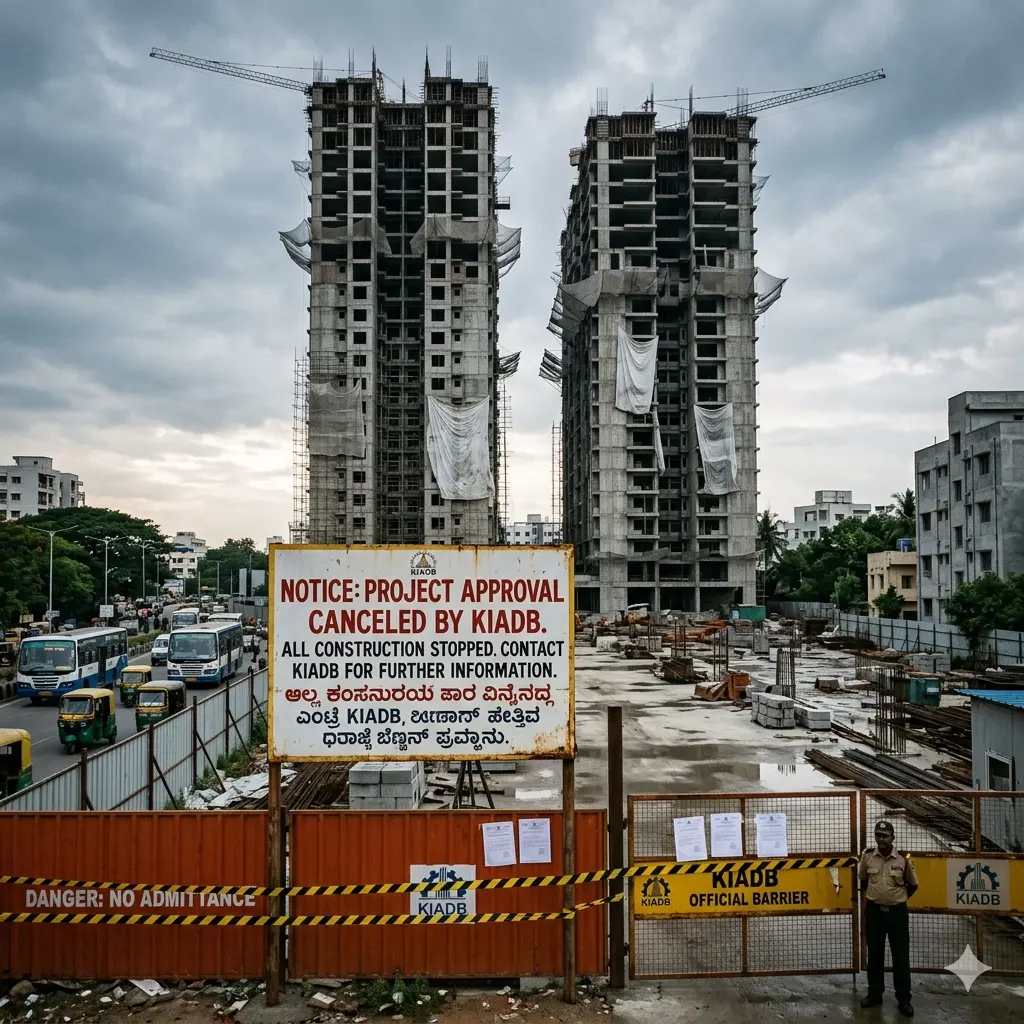
Bengaluru High-Rise Project Faces Approval Cancellation by KIADB

If you have been keeping an eye on the property market lately, you probably saw the headlines that sent a shiver down the spines of homebuyers and developers alike. A major Bengaluru high-rise project is currently facing the axe, with the authorities moving toward a drastic KIADB approval cancellation. For the hundreds of prospective homeowners who had booked their dream flats in this tower, this isn’t just a news headline; it’s a waking nightmare. Their life savings suddenly hang in limbo, and the trust they placed in a builder has vanished into thin air. Let’s be brutally honest here: buying a home in Bengaluru is not a walk in the park. It takes years of saving, compromising on daily luxuries, and navigating a dizzying maze of paperwork. So, when you hear that a project you invested in has hit a regulatory wall this massive, it’s absolutely terrifying. But how does something like this even happen? What allows a massive, multi-crore high-rise to get off the ground only to lose its permissions? To understand this, we need to peel back the layers of Bengaluru real estate news and look at the complex, often messy world of land usage, zoning laws, and regulatory oversight. Let’s dive deep into what this recent crisis means for the city, the buyers, and the future of Urban development Bengaluru. Understanding the Beast: What is KIADB? Before we can grasp the gravity of a cancellation, we need to understand the body that holds the power. KIADB stands for the Karnataka industrial area development board. The government established it with a very specific mandate: to acquire land and develop infrastructure for industries in the state. Think of them as the custodians of Karnataka’s industrial future. They create industrial parks, set up special economic zones (SEZs), and ensure that manufacturing and tech companies have the land and infrastructure they need to operate. But here is where the water gets murky. In a rapidly expanding city like Bengaluru, the lines between “industrial” and “residential” have blurred significantly. Tech parks sit right next to residential apartments, cafes, and malls. Developers, seeing the massive demand for housing near these employment hubs, often try to build residential projects on or adjacent to KIADB-allotted lands. They attempt this through loopholes, re-zoning applications, or joint ventures. When a builder wants to construct a residential high-rise on land that falls under KIADB’s jurisdiction, they must obtain explicit KIADB project approval. This is not a simple formality. The developer must prove that the authorities have legally converted the land use, that the infrastructure can support a massive residential population, and that the project aligns with the broader industrial and urban planning goals of the region. The Anatomy of a Cancellation: How Did We Get Here? So, why does a KIADB project approval get canceled? It usually doesn’t happen overnight. Rather, it’s the culmination of red flags, ignored rules, and eventually, the law catching up. In the case of this recent Bengaluru high-rise project, the roots of the problem lie in the messy intersection of land conversion and zoning violations. When KIADB allots land, it strictly restricts it to industrial or allied purposes. If a developer decides to build luxury apartments on land that still technically carries an industrial designation, or if they have only received partial, conditional approval, they are playing a very dangerous game. One of the most common High-rise building approval issues in these scenarios involves developers constructing far beyond what they initially sanctioned. A developer might get approval for a smaller structure or a different type of building, and then quietly revise the plans to build a towering residential complex. They bank on the fact that by the time the authorities notice, the building will stand as a fait accompli—too big and too expensive to demolish. However, regulatory bodies have started pushing back hard. The KIADB approval cancellation we are seeing today sends a stark message: the government will not tolerate the misuse of industrial land for unauthorized residential gain. Whether a builder encroaches on buffer zones, violates floor area ratios (FAR), or flat-out ignores the stipulated land use, the consequences are now severe. The Ripple Effect: Who Really Pays the Price? When the media broadcasts an Apartment project approval news disaster, the developer’s reputation takes a hit, sure. But the real victims are the homebuyers. Imagine being an IT professional who has taken a 20-year loan, paid stamp duty, and eagerly awaits possession, only to discover the authorities might demolish or stall your project indefinitely. The emotional toll is immense. Families argue, sleep vanishes, and the dream of owning a home transforms into a financial trap. Legally, the buyers find themselves stuck in a quagmire. They can approach the Real Estate Regulatory Authority (RERA), but recovering money from a developer whose project just collapsed is a long, arduous battle. The funds of the project often tie up in construction costs, leaving very little for refunds. This is exactly why Real estate regulations Karnataka exist in such stringent form. They aren’t just bureaucratic hoops to jump through; they form the only safety net protecting the consumer. When a builder bypasses the system to secure a KIADB project approval through questionable means, they essentially gamble with the life savings of ordinary people. The Bigger Picture: Bangalore Infrastructure Development at a Crossroads Bengaluru is a city that perpetually finds itself in a state of construction. Cranes dot the skyline, and the sound of cement mixers provides the background noise of our lives. Yet, the chaotic growth of the city stems directly from the tension between demand and planning. Historically, Bangalore infrastructure development has struggled to keep pace with the massive influx of population. The tech boom brought millions of people to the city, creating an insatiable demand for housing near employment hubs. This led to the vertical growth of the city—high-rises popping up in every available nook and cranny. However, Urban development Bengaluru cannot just revolve around building tall buildings. It requires a holistic approach.

Bengaluru High-Rise Project Faces Approval Cancellation by KIADB Read More »

Construction Dust in Bengaluru affecting air quality near urban building projects by MNM Enterprises

Bengaluru Faces Air Quality Issues Due to Construction Dust

Let’s take a moment and be brutally honest about something that has been creeping up on us. Do you remember the old Bengaluru? The city where stepping out for a morning walk meant breathing in air so fresh it felt like a privilege? The city proudly wore the title of the “Garden City,” where the weather was the stuff of legends and the air stayed perpetually clean. Fast forward to today, and that reality feels like a fading dream. If you step outside right now, especially in areas experiencing a real estate boom, you won’t smell the rain or the flowers. Instead, you’ll taste grit. You’ll feel that dry, scratchy sensation at the back of your throat. You’ll wipe a layer of fine, grey powder off your scooter seat every single morning. We are living in a city that is quite literally choking on its own growth. The headline we are analyzing today—“Bengaluru Faces Air Quality Issues Due to Construction Dust”—is not just a news flash. It is our daily reality. It is the silent crisis that is affecting our health, our children, and our overall quality of life. And as someone deeply embedded in this industry through MNM Enterprises, I can tell you that we can no longer sweep this problem under the rug. Or rather, we can no longer let it blow into our living rooms. Decoding the Title: What Does “Air Quality Issues” Really Mean? When we read the phrase “Air Quality Issues,” it sounds very clinical, doesn’t it? It sounds like a statistic on a government dashboard. But for the residents of Bengaluru, it translates into a very painful, very human experience. Bengaluru Air Pollution is no longer a distant threat; it is a present danger. For years, we consoled ourselves by comparing our air to Delhi’s toxic smog. We said, “At least we aren’t as bad as the north.” But that complacency is hurting us. The Air Quality Index (AQI) in several parts of our city has consistently hit “Poor” and “Very Poor” marks, especially during the dry months. The Reality of Poor Air Quality Bengaluru Poor Air Quality Bengaluru is a reality that hits you when you realize you can no longer see the skyline clearly from Nandi Hills. It hits you when the beautiful silhouettes of our beloved skyline stay permanently shrouded in a brownish-grey haze. It is the reality of walking into your home and realizing your freshly mopped floor gathers dust again within hours. The “issues” the title speaks of are not just inconveniences; they represent a fundamental degradation of the environment that made this city so desirable in the first place. The Culprit Unmasked: The Invisible Cloud of Dust The title specifically points the finger at “Construction Dust.” This is the crux of the matter. Bengaluru is one of the fastest-growing metropolises in the world. The IT boom brought an influx of people, and those people need homes, offices, and infrastructure. The result? Cranes and scaffolding define our city’s skyline. From Whitefield to Electronic City, from Hennur to Sarjapur, construction sites dominate the landscape. But all this progress comes with a heavy price. Construction Dust in Bengaluru [1] has become the primary antagonist in our fight for clean air. What exactly is this dust? It is a toxic cocktail of particulate matter. When earthmovers dig into the red soil of Bengaluru, when workers mix concrete, when laborers cut bricks, and when trucks haul away debris, they release millions of microscopic particles into the air. The Danger of Dust Pollution from Construction Sites We are talking about PM10 (particles with a diameter of 10 micrometers or less) and the far more dangerous PM2.5 (particles 2.5 micrometers or less). These particles are so tiny that they bypass our body’s natural defenses—the hair in our noses, the mucus in our throats—and lodge themselves deep into our lungs. Some even enter our bloodstream. The Dust Pollution from Construction Sites is not just dirt; it is a silent, invisible assassin. The Real-World Impact: It’s Not Just Dirty Cars Let’s move away from the science for a second and talk about the real human cost. The Environmental Impact of Construction Bengaluru is staggering, but the health impact is what should truly alarm us. I talk to residents every day. I meet elderly couples who have lived in their homes for thirty years but can no longer open their windows because the construction next door triggers their asthma. I meet young parents who are terrified of letting their toddlers play in the garden because the air hangs thick with cement dust. Doctors report a massive spike in respiratory illnesses—chronic bronchitis, allergic rhinitis, and asthma. The constant inhalation of Construction Air Pollution Bengaluru is making our children sick and our elderly frail. Furthermore, this dust carries heavy metals and toxic chemicals from cement, silica, and paint. When this dust settles on our cars, it creates an annoyance. But when we breathe it into our lungs, it creates a health hazard. Urban Pollution in Bengaluru has reached a tipping point, and construction dust leads the charge. The Root of the Problem: Why is it so Bad? You might ask, “Construction happens all over the world. Why is it so terrible in Bengaluru?” The answer lies in how builders have historically managed construction in our city. The primary issue is a complete disregard for Construction Site Dust Control. For decades, the standard operating procedure for a construction site in Bengaluru has been: dig, build, and let the dust settle wherever it may. The Complete Disregard for Construction Site Dust Control 1. Uncovered Debris and Open Trucks If you drive on any of our ring roads, you will inevitably find yourself behind a truck carrying construction debris or sand. Nine times out of ten, the load sits completely uncovered. As the truck speeds down the road, it leaves a massive trail of dust and sand in its wake. By the time it reaches its destination, a significant portion of its

Bengaluru Faces Air Quality Issues Due to Construction Dust Read More »

BBMP Building Plan Charges in Bengaluru for residential construction projects by MNM Enterprises

Higher Building Plan Approval Charges in Bengaluru

Let’s sit down and have a very honest conversation about something that stings. If you plan to build your dream home in Bengaluru, you probably already experienced the shock of the city’s real estate prices. You scraped together every hard-earned penny to buy that perfect 30×40 site in a quiet layout. You spent months working with an architect, designing the perfect living room, the cozy pooja room, and the little balcony for your morning coffee. You feel ready. And then, you apply for your building plan approval, and the civic body hands you a bill that makes your jaw drop. Welcome to the reality of Higher Building Plan Approval Charges in Bengaluru. When I saw this title trending among homeowner groups and builder forums, I nodded my head in quiet solidarity. At MNM Enterprises, we walk hand-in-hand with our clients through the labyrinth of Bengaluru’s real estate market every single day. Therefore, we see the exact moment the excitement of building a home collides with the harsh reality of government fees. People feel frustrated, angry, and confused. Consequently, they ask us, “Why does the government charge so much just to give me permission to build on land I already own?” It is a valid question. It is a bitter pill to swallow. However, to navigate this system successfully—and without going bankrupt—you must understand the “why” behind these charges. First, you need to know what goes into the BBMP Building Plan Charges [1]. Second, you must understand how the system works. Finally, you need to know how to budget for it so your dream project doesn’t stall before the first brick is laid. Let’s rip the band-aid off and decode this together. Analyzing the Title: What Does “Higher” Really Mean? Let’s break down that title piece by piece. The word “Higher” does a lot of heavy lifting here. It implies a comparison. Compared to what? Compared to the Bengaluru of a decade ago, the charges today feel astronomical. But why did they climb so steeply? First, the city changed dramatically. Bengaluru no longer resembles a sleepy pensioner’s paradise; instead, it stands as a global megacity groaning under the weight of its own infrastructure. When you build a house, you do not just put concrete on dirt. Rather, you tap into the city’s water supply. Furthermore, you add pressure to the sewage lines. Additionally, you increase traffic on the roads. Finally, you expect emergency services to protect your home. Therefore, civic bodies argue that these BBMP Plan Approval Fees represent your contribution to the urban infrastructure your home consumes. Second, “Higher” also reflects a shift in policy from a reactive system to a proactive one. In the past, the government charged nominal fees. Ironically, this led to a culture of bribery and illegal constructions. However, by making the official Building Permission Charges Bangalore higher and more comprehensive, the government attempts to formalize the sector. Consequently, they leave less room for under-the-table negotiations. Undeniably, it hurts the wallet upfront, but ultimately, it makes the system more transparent in the long run. The Anatomy of the Charges: Where Does Your Money Go? When you receive that invoice for your House Plan Approval Cost Bengaluru, it isn’t just one giant arbitrary number. Instead, it comprises a complex cocktail of different fees, cesses, and deposits. Understanding this breakdown serves as the first step toward making peace with the expense. Let’s demystify the main components. 1. The Base Sanction Fee This represents the foundational fee. The civic body—whether BBMP or BDA—charges this amount to review your plan. Specifically, they check if your plan complies with zoning regulations, like the Floor Area Ratio (FAR). Then, they officially stamp it as approved. This forms the core of your Building Sanction Fees Bangalore. Usually, they calculate this fee based on the built-up area of your proposed home. Therefore, the larger your house, the higher this fee climbs. 2. Infrastructure and Betterment Charges This category takes a significant chunk of your money. The logic here remains simple: your new house benefits from the roads, parks, and sewage systems built around it. Therefore, the betterment charge acts as your one-time fee to “better” the infrastructure to support your new addition to the neighborhood. When people complain about higher BBMP Building Plan Charges [2], this betterment charge usually acts as the main culprit. Depending on your plot size and location, it can reach lakhs of rupees. 3. Labor Cess India maintains stringent labor laws to protect construction workers. Therefore, a portion of your Construction Approval Charges Bengaluru goes directly to the labor cess. The government mandates this contribution to the welfare fund for the workers who will build your home. It functions as a non-negotiable, socially responsible fee. Ultimately, it ensures medical and educational benefits for the labor force. 4. Utility Deposits (Water and Sanitation) Naturally, you want water in your home. Similarly, you want your sewage to flow away properly. Hence, the Bangalore Water Supply and Sewerage Board (BWSSB) requires you to pay a deposit for water and sanitation connections. Although technically separate from the plan approval, you practically cannot get your plan approved without proof of these payments or undertakings. These Property Approval Fees Bengaluru act as a security deposit. Consequently, they ensure you don’t default on your utility bills in the future. 5. DC Conversion and Land Use Fees If someone previously used your plot as agricultural land, they had to convert it for residential use under the Deputy Commissioner’s order. In these cases, you will face additional scrutiny and fees during the plan approval stage. Ensuring the land use complies entirely adds layers to the approval cost. BBMP vs. BDA: A Tale of Two Jurisdictions If anything confuses first-time homebuilders more than anything else, it is the jurisdictional maze of Bengaluru. Does your site fall under the Bruhat Bengaluru Mahanagara Palike (BBMP) or the Bangalore Development Authority (BDA)? This distinction will heavily dictate your costs. The BBMP Reality If your site falls within the BBMP limits—which covers the

Higher Building Plan Approval Charges in Bengaluru Read More »