Author name: Aishwarya Nagraj

Construction Deviation Limits in Bengaluru for residential building projects by MNM Enterprises

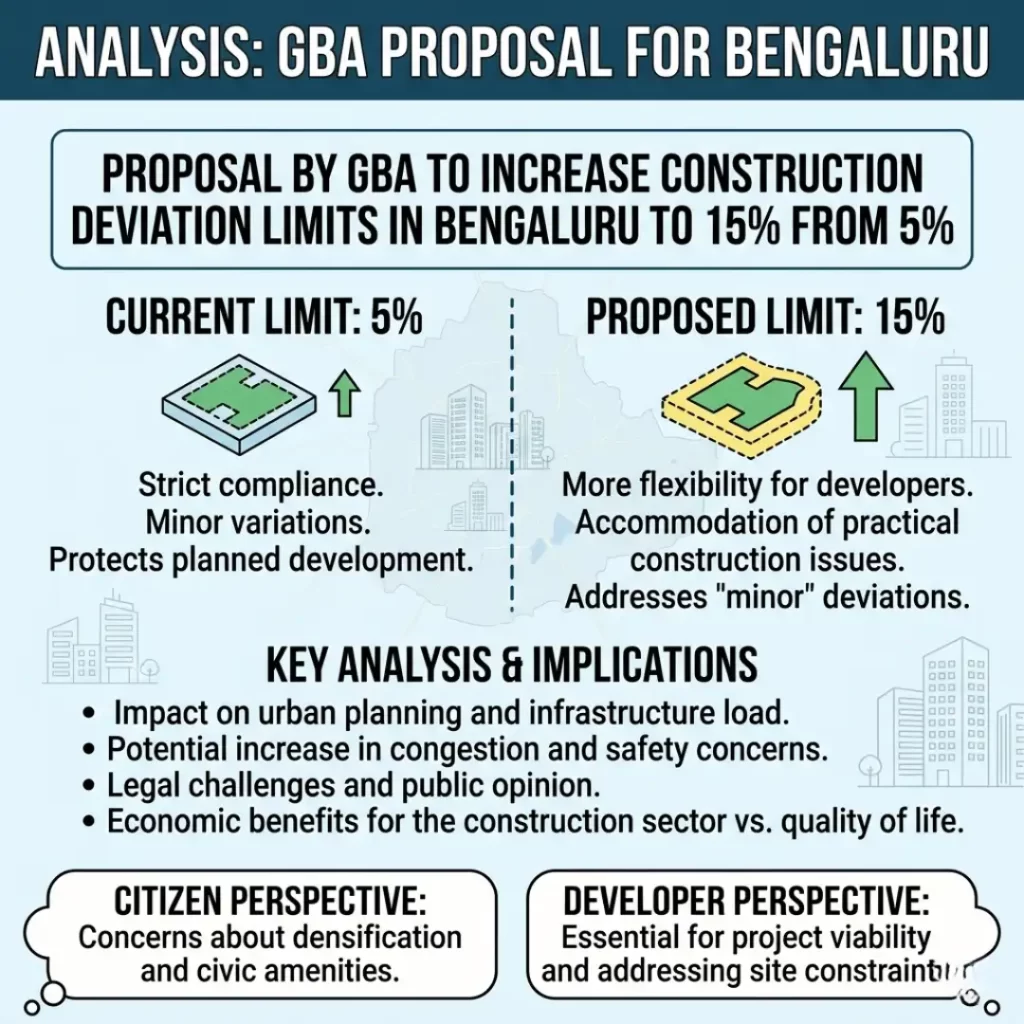
Proposal by GBA to increase construction deviation limits in Bengaluru to 15% from 5%

Let’s be incredibly honest about something right from the start. Building your dream home in Bengaluru is not for the faint of heart. In fact, it is an emotional rollercoaster and a financial marathon. Just when you finalize your floor plan, you hit a massive wall of regulations. Moreover, the most frustrating regulation governs how much your actual building can differ from the plan on paper. Consequently, a recent headline gives immense hope to thousands of homeowners and builders. The headline reads, “Proposal by GBA to increase construction deviation limits in Bengaluru to 15% from 5%.” When I read this, I sighed with massive relief. If you ever built anything here, you know exactly why this matters. Undoubtedly, this is not just a boring policy update. Rather, it is a potential lifeline. It acknowledges the harsh realities of on-site construction. At MNM Enterprises, we navigate the rigid Construction Deviation Limits in Bengaluru daily. Let me tell you, the current 5% rule causes more headaches than the city’s traffic. So, what does this proposal actually mean? Furthermore, why is the GBA pushing for it? How will it impact your dream project? Let’s analyze the headline and see why this is a massive game-changer. Decoding the GBA Proposal on Construction Limits To understand this news, we must break down the headline. After all, the devil always hides in the details of real estate regulations. Understanding the Current Construction Deviation Limits in Bengaluru First, what is a deviation? In simple terms, it is the difference between the approved plan and the actual building. Practically, builders cannot construct a structure exactly to the millimeter. The ground has bumps. Soil conditions vary. You might need to adjust a pillar’s position for better structural integrity. Or, you might realize that moving a wall improves the living room’s flow. However, the current law only allows a tiny 5% wiggle room for these changes. Consequently, the Construction Deviation Limits in Bengaluru cause constant anxiety for everyone involved in the building process. The Push for the Proposal to Increase Construction Deviation Limits in Bengaluru The GBA represents the voice of builders and developers. They finally brought the industry’s biggest pain point to the forefront. They are not just complaining. Instead, they offer a practical solution to a long-standing problem. Specifically, they submitted the GBA Proposal on Construction Limits to the state government. They demand a long-overdue reality check. By pushing the Proposal to increase construction deviation limits in Bengaluru, they highlight the urgent need for flexibility. Moving from 5% to 15% triples the allowable flexibility. Therefore, it separates living in constant fear from having room to build safely. The Nightmare of the 5% Era: Bengaluru Building Bye Laws To appreciate the proposed 15% limit, you must understand the sheer terror of the 5% limit. Let me paint a picture from our experience at MNM Enterprises. Imagine building a 2,000 square foot house. A 5% deviation allows you to alter only 100 square feet. Initially, that sounds okay on paper. But construction does not happen in a vacuum. How BBMP Building Deviation Rules Affect Homeowners During excavation, your engineer might find a massive, uncharted sewage line. To avoid it, the structural engineer shifts the ground-floor columns by a few feet. Unfortunately, that shift alone eats up your 5% deviation. By the time you reach the first floor, you have zero room for error. If you add a small utility balcony off the master bedroom, you suddenly violate the Bengaluru Building Bye Laws. Under current BBMP Building Deviation Rules, crossing that 5% threshold brands your building as “deviated” or “illegal.” Consequently, officials slap you with massive penalties or stop-work notices. Worse, they might issue a demolition notice. We saw honest families beg officials not to tear down their homes just for extending a kitchen. Undoubtedly, this creates a toxic environment. It forces homeowners to live in fear. It also encourages corruption, as some people bribe officials to overlook minor deviations. The Building Plan Deviation Bengaluru scenario has haunted the industry for far too long. The 15% Solution: Bengaluru Deviation Limits Raised from 5% to 15% This is exactly why everyone celebrates the push for Bengaluru deviation limits raised from 5% to 15%. A 15% deviation limit gives you up to 300 square feet of flexibility on that same 2,000 square foot house. That is a monumental game-changer. As a result, it allows genuine, on-the-spot problem-solving. It accounts for the minor changes that make a house a home. Think about the practical applications. Often, soil tests reveal lower load-bearing capacity. Therefore, engineers need to thicken pillars or widen footings. This eats into setbacks. A 15% limit allows these critical safety adjustments without penalizing the owner. You might also want lifestyle upgrades. You can add a pooja room or extend your living area. You can accommodate modern utilities like rainwater harvesting tanks or solar panel mounts. GBA Proposal for Higher Construction Flexibility: What It Means Ultimately, the GBA proposal for higher construction flexibility does not encourage illegal constructions. Rather, it recognizes the difference between a harmless adjustment and a malicious violation. Builders and homeowners need practical space to adapt. They should not face criminal branding for minor issues. Therefore, this proposal aligns the law with practical construction truths. Separating Minor Adjustments from Malicious Violations Under New Building Deviation Rules in Bangalore Critics often argue against raising the deviation limit. They fear chaos. They ask, “Won’t builders just build whatever they want and claim a 15% deviation?” As a reputed construction company, MNM Enterprises strongly believes in ethical building. Therefore, we oppose illegal encroachments or dangerous constructions that block setbacks. However, a huge difference exists between extending a balcony and constructing an unauthorized floor. The Construction Rule Changes Bangalore desperately needs must distinguish between the two. Previously, the 5% rule treated a family adding a shoe-rack the same as a developer building into a public road. Frankly, that is deeply unjust. Construction Approval Rules Bengaluru: Maintaining Safety Standards The proposed framework ensures that

Proposal by GBA to increase construction deviation limits in Bengaluru to 15% from 5% Read More »

Bengaluru construction rules requiring plinth marking before building work

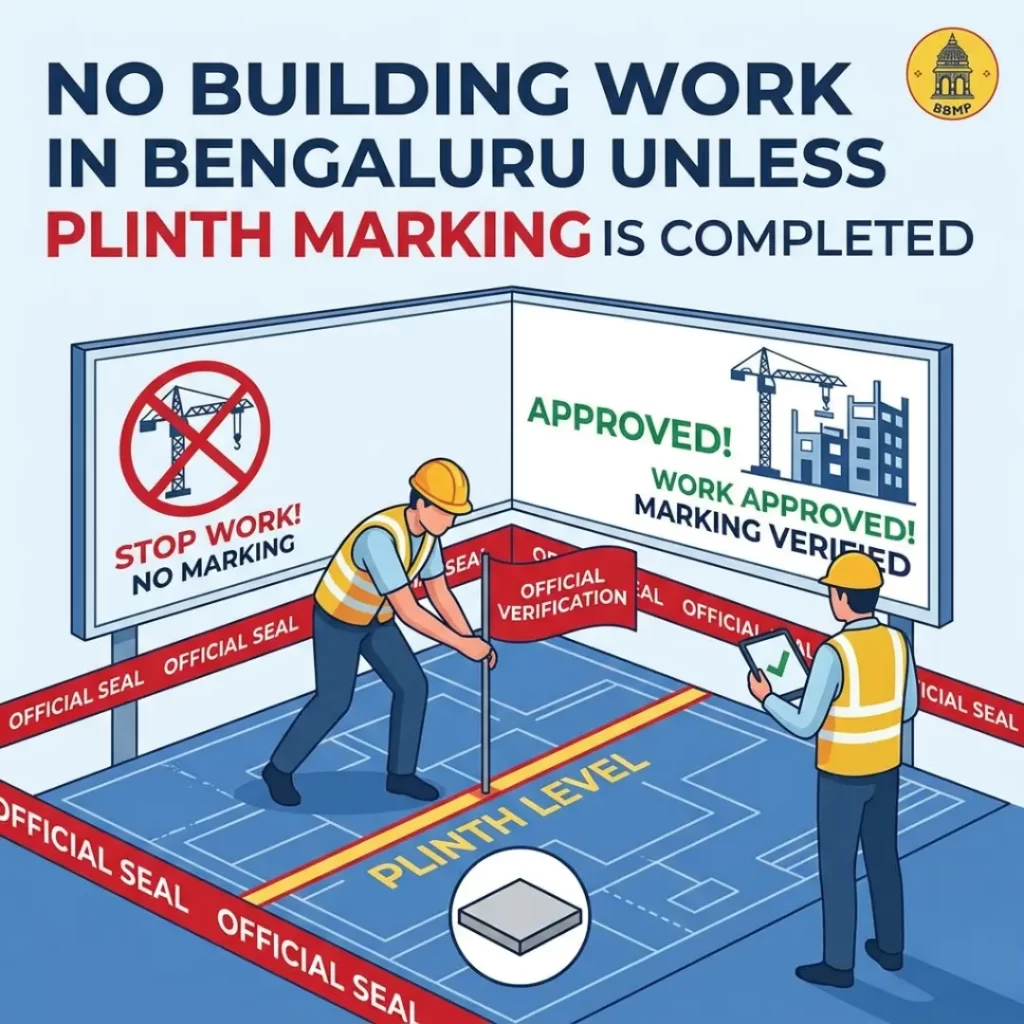
No building work is allowed in Bengaluru unless plinth marking is completed, say officials.

Let me tell you a story that might feel uncomfortably familiar if you are a plot owner. Navigating Bengaluru construction rules often feels like trying to solve a Rubik’s cube blindfolded. Last Tuesday, I sat at a crowded darshini near Jayanagar 4th Block, sweating in the heat while waiting for my masala dosa. The guy at the next table stared at his phone, looking like he was about to have a heart attack. He muttered under his breath, rubbed his forehead, and aggressively typed on his screen. Being slightly nosy, I glanced over. He was reading a news alert: “E-Khata mandatory for building plan approval from July 1: Bengaluru civic body.” He turned to the man opposite him and groaned, “Ravi, if this is true, my construction delays by another six months. I don’t even know what an E-Khata is!” If you own a plot in this city, or if you dream of building a house here, that headline probably gave you a sinking feeling in your stomach. It brings on a specific type of anxiety that only local real estate and BBMP bureaucracy can induce. Decoding the Headline Let’s pull apart this title because understanding why they wrote it this way helps you know what you are up against. First, it gives you a hard, unforgiving deadline: July 1. There is no “we’ll look into it later” vibe here. Second, it names the authority: the Bengaluru civic body, which is our beloved and baffling BBMP. Third, it uses the word “mandatory.” Not recommended, not preferred. Mandatory. The single biggest question echoing across every Bengaluru layout WhatsApp group right now is simple: Is e-Khata mandatory for building plan approval in Bengaluru? Save yourself the sleepless nights. Yes. Absolutely, undeniably, 100% yes. If you want to build a legal house, you cannot escape this BBMP e-Khata requirement. The Reality of Buying Land Before we get into the technicalities of this document, we need to talk about the reality of buying land in Bengaluru. People from outside the city think Bengaluru is just tech parks, amazing cafes, and great weather. But those of us who have actually tried to build a home here know the dark truth. Buying a piece of land is only step one. The real battle is the Bengaluru property approval process. It acts as an obstacle course designed to test your patience, your wallet, and your sanity. Imagine spending your life savings, taking a massive loan, and buying a 30×40 site. You picture your kids playing in the garden. Then, you hire an architect who draws up beautiful 3D models. Thrilled, you are ready to build. That is when the nightmare begins. The architect says, “Okay, now we need to submit this to the BBMP for a plan sanction.” And that strict BBMP e-Khata requirement suddenly becomes the only thing standing between you and your dream home. The Old Way vs. The Digital Shift For decades, getting your building plan approved meant physically marching into a BBMP office. If you’ve ever been inside one—whether in Koramangala, Rajajinagar, or Yelahanka—you know the vibe. It’s a maze of dusty rooms, towering stacks of paper from the 1990s, and general confusion. Your architect would bundle up your building plans, attach your old, handwritten, physically stamped Khata certificate (usually on yellow paper falling apart), and submit it to an Assistant Revenue Officer. Then, you waited. Sometimes for months. Why? Because a junior clerk had to manually open a massive ledger book, flip through hundreds of pages, find your survey number, and verify your property taxes. If the clerk was in a bad mood, your file went to the bottom of the pile. The government finally realized that running a modern tech-capital using 1980s ledger books was embarrassing. So, they digitized property records. But people in Bengaluru are stubborn. We love physical documents. Because nobody voluntarily switched to the digital system, BBMP dropped a hammer. That hammer is the e-Khata rules July 1 Bengaluru announcement, alongside the new e-Khata rules Bengaluru July 1 enforcement. These updated Bengaluru construction rules aim to force everyone into the digital age. What Exactly is an E-Khata? Let’s strip away the government jargon. “Khata” literally means “account.” It’s just a piece of paper saying, “This piece of land belongs to this person, and this person pays property tax on it.” An E-Khata is the exact same thing, but it lives on a computer. It serves as a digital extract of your property tax record. However, it has a magic component that makes it different from a regular PDF: a digital cryptographic signature. When you generate an E-Khata, the BBMP server attaches a unique, tamper-proof digital signature to it. It also generates a QR code. If any official anywhere in Karnataka wants to verify it, they just scan the QR code with their phone. It instantly pulls up the official government database showing your name, your plot dimensions, and your tax payment history. You cannot forge it. And as of July 1, this digital file acts as your new master key for any e-Khata for building plan approval. The civic body firmly states that if your property isn’t updated in their digital system, they aren’t giving you permission to build on it. Modern Bengaluru construction rules now rely entirely on this digital verification. Failing to provide it means failing to meet the strict BBMP e-Khata requirement. The Hidden Trap That Will Cost You Months This is the most important part of this entire article. Please read it carefully. Many people confuse this deadline. Some think, “If I don’t have an E-Khata by July 1, the government will demolish my house.” That is false. What the rule actually means is this: Starting July 1, when you (or your architect) log into the BBMP SAKALA portal to submit an application for a new building plan approval, the software will not let you proceed unless you upload a valid E-Khata PDF with a digital signature. Trying to upload a scanned copy

No building work is allowed in Bengaluru unless plinth marking is completed, say officials. Read More »

BBMP e-Khata requirement for building plan approval in Bengaluru

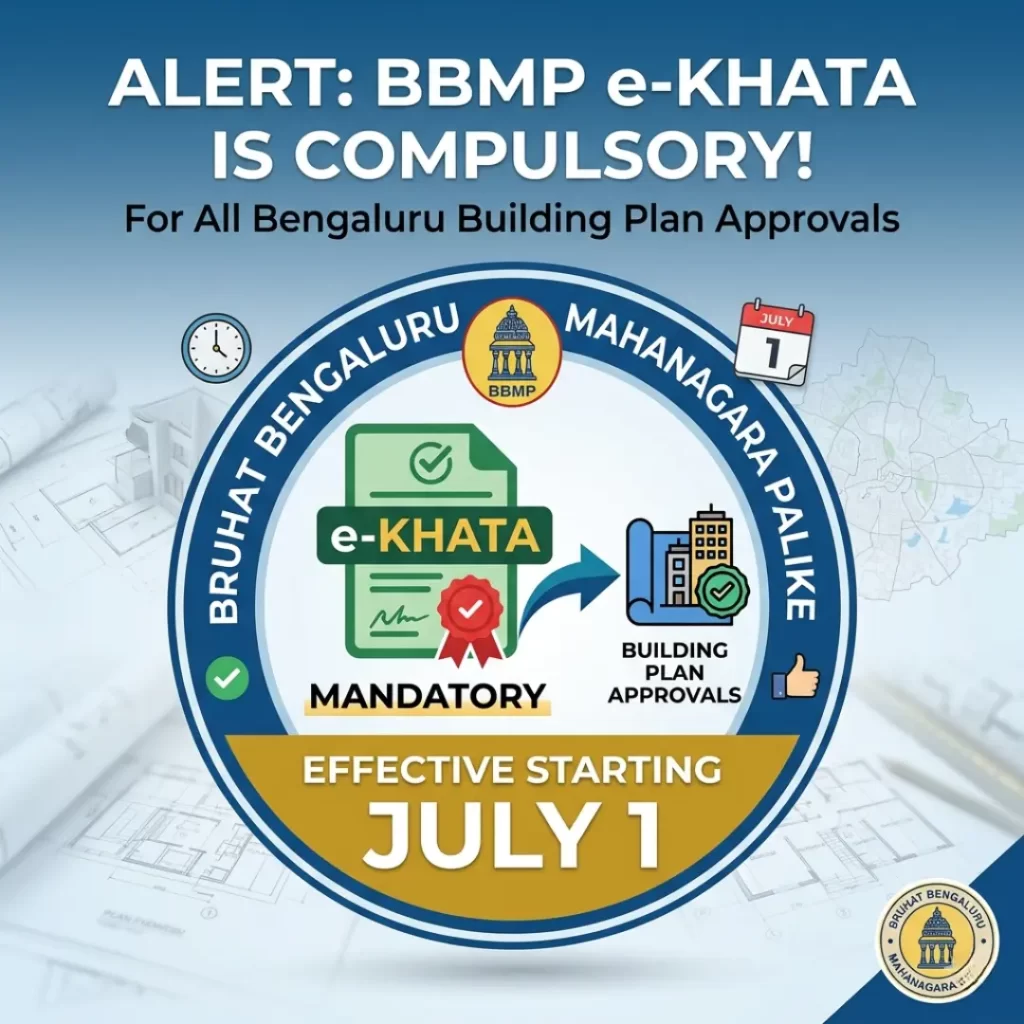
Bengaluru civic body makes e-Khata compulsory for building plan approvals starting July 1.

Let me tell you a story that might feel uncomfortably familiar. Last Tuesday, I sat at a crowded darshini near Jayanagar 4th Block, sweating in the Bengaluru heat while waiting for my masala dosa. The guy at the next table stared at his phone, looking like he was about to have a heart attack. He muttered under his breath, rubbed his forehead, and aggressively typed on his screen. Being slightly nosy, I glanced over. He was reading a news alert: “E-Khata mandatory for building plan approval from July 1: Bengaluru civic body.” He turned to the man opposite him and groaned, “Ravi, if this is true, my construction delays by another six months. I don’t even know what an E-Khata is!” If you own a plot in Bengaluru, or if you dream of building a house in this beautiful, chaotic city, that headline probably gave you a sinking feeling in your stomach. It brings on a specific type of anxiety that only Bengaluru real estate and BBMP bureaucracy can induce. Decoding the Headline Let’s pull apart this title because understanding why they wrote it this way helps you know what you are up against. First, it gives you a hard, unforgiving deadline: July 1. There is no “we’ll look into it later” vibe here. Second, it names the authority: the Bengaluru civic body, which is our beloved and baffling BBMP. Third, it uses the word “mandatory.” Not recommended, not preferred. Mandatory. The single biggest question echoing across every Bengaluru layout WhatsApp group right now is simple: Is e-Khata mandatory for building plan approval in Bengaluru? Save yourself the sleepless nights. Yes. Absolutely, undeniably, 100% yes. If you want to build a legal house, you cannot escape this BBMP e-Khata requirement. The Reality of Buying Land Before we get into the technicalities of this document, we need to talk about the reality of buying land in Bengaluru. People from outside the city think Bengaluru is just tech parks, amazing cafes, and great weather. But those of us who have actually tried to build a home here know the dark truth. Buying a piece of land is only step one. The real battle is the Bengaluru property approval process. It acts as an obstacle course designed to test your patience, your wallet, and your sanity. Imagine spending your life savings, taking a massive loan, and buying a 30×40 site. You picture your kids playing in the garden. Then, you hire an architect who draws up beautiful 3D models. Thrilled, you are ready to build. That is when the nightmare begins. The architect says, “Okay, now we need to submit this to the BBMP for a plan sanction.” And that strict BBMP e-Khata requirement suddenly becomes the only thing standing between you and your dream home. The Old Way vs. The Digital Shift For decades, getting your building plan approved meant physically marching into a BBMP office. If you’ve ever been inside one—whether in Koramangala, Rajajinagar, or Yelahanka—you know the vibe. It’s a maze of dusty rooms, towering stacks of paper from the 1990s, and general confusion. Your architect would bundle up your building plans, attach your old, handwritten, physically stamped Khata certificate (usually on yellow paper falling apart), and submit it to an Assistant Revenue Officer. Then, you waited. Sometimes for months. Why? Because a junior clerk had to manually open a massive ledger book, flip through hundreds of pages, find your survey number, and verify your property taxes. If the clerk was in a bad mood, your file went to the bottom of the pile. The government finally realized that running a modern tech-capital using 1980s ledger books was embarrassing. So, they digitized property records. But people in Bengaluru are stubborn. We love physical documents. Because nobody voluntarily switched to the digital system, BBMP dropped a hammer. That hammer is the e-Khata rules July 1 Bengaluru announcement, alongside the new e-Khata rules Bengaluru July 1 enforcement. What Exactly is an E-Khata? Let’s strip away the government jargon. “Khata” literally means “account.” It’s just a piece of paper saying, “This piece of land belongs to this person, and this person pays property tax on it.” An E-Khata is the exact same thing, but it lives on a computer. It serves as a digital extract of your property tax record. However, it has a magic component that makes it different from a regular PDF: a digital cryptographic signature. When you generate an E-Khata, the BBMP server attaches a unique, tamper-proof digital signature to it. It also generates a QR code. If any official anywhere in Karnataka wants to verify it, they just scan the QR code with their phone. It instantly pulls up the official government database showing your name, your plot dimensions, and your tax payment history. You cannot forge it. And as of July 1, this digital file acts as your new master key for any e-Khata for building plan approval. The civic body firmly states that if your property isn’t updated in their digital system, they aren’t giving you permission to build on it. The Hidden Trap That Will Cost You Months This is the most important part of this entire article. Please read it carefully. Many people confuse this deadline. Some think, “If I don’t have an E-Khata by July 1, the government will demolish my house.” That is false. What the rule actually means is this: Starting July 1, when you (or your architect) log into the BBMP SAKALA portal to submit an application for a new building plan approval, the software will not let you proceed unless you upload a valid E-Khata PDF with a digital signature. Trying to upload a scanned copy of your old, handwritten yellow-paper Khata triggers an instant rejection. Uploading a regular printout of your tax receipt without the digital signature also gets blocked immediately. This BBMP e-Khata requirement acts as a digital bouncer, stopping illegal or unverifiable constructions before they even start. The Pre-Check Mistake A lot of people think the

Bengaluru civic body makes e-Khata compulsory for building plan approvals starting July 1. Read More »

House construction rules Karnataka for 30x40 rural plots with relaxed occupancy certificate norms

Rural homeowners in Karnataka get relief as occupancy certificate norms are relaxed for 30×40 plots

For decades, building a home in rural Karnataka meant navigating a massive maze of red tape. Consequently, bureaucratic paperwork left many rural families in limbo. Often, their dream homes earned an illegal tag due to a single missing document. Now, however, a massive paradigm shift is underway. Specifically, the recent announcement about OC norms relaxed Karnataka brings a collective sigh of relief to thousands. Furthermore, the targeted Occupancy certificate relaxation for standard sites has revolutionized the rural real estate landscape. At MNM Enterprises, a premier construction company, we turn your architectural dreams into concrete reality. Ultimately, we believe awareness is the first step toward hassle-free building. Therefore, in this guide, we will dissect these monumental policy shifts. Moreover, we will explore how the updated House construction rules Karnataka impact 30×40 plots Karnataka. Finally, we will show why partnering with an experienced firm like MNM Enterprises helps you navigate this newly simplified environment. Understanding the Core Issue Before we celebrate, we must understand the Karnataka occupancy certificate and why its absence caused nightmares for Rural homeowners Karnataka. Essentially, local civic bodies issue this vital document. By doing so, it certifies that the building matches the approved plan and adheres to local safety norms. Without this document, authorities consider a property unauthorized. As a result, you cannot legally sell, mortgage, or get legal utility connections for an unauthorized home. Historically, the OC rules Karnataka favored urban centers like Bengaluru and Mysuru. Unfortunately, authorities blindly applied these stringent urban rules to rural areas, causing total chaos. For instance, rural homeowners build their homes incrementally. They start with a basic structure and add rooms as their finances allow. Yet, they faced severe penalties for minor setbacks or slight deviations in plinth area. Furthermore, officials penalized them for lacking urban fire escapes, which make no sense in a village setting. Clearly, this historical rigidity failed the common man completely. The Game Changer Fortunately, the state government finally recognized this glaring disparity. Subsequently, they took a progressive step by easing the burden on rural families. In particular, the core of this update focuses on Rural housing Karnataka. Finally, officials acknowledged a harsh reality. Indeed, applying microscopic urban parameters to a house in an agricultural field is administrative overreach. To address this, new directives instruct local bodies to take a pragmatic approach. Instead of obsessing over urban bylaws, they must look at structural safety and basic sanitation. Undoubtedly, this shift dramatically altered Karnataka property regulations. As a bonus, it makes the system infinitely more forgiving for the rural populace. Today, House construction rules Karnataka support rural habitats rather than restricting them. The Spotlight on 30×40 Plots Karnataka Undeniably, the 30×40 dimension is the undisputed king of residential plotting. Obviously, it offers the perfect canvas for a comfortable family home. However, 30×40 plots Karnataka faced intense regulatory scrutiny due to their immense popularity. In fact, constructing on a 30×40 site in a rural Gram Panchayat area meant walking a tightrope. During construction, homeowners had to ensure every square inch matched the sanctioned plan flawlessly. For example, if a homeowner added an extra bathroom during construction, local authorities would refuse the Karnataka occupancy certificate. Thereafter, the building would receive a deviation tag, leading to fines and endless office visits. But with the OC norms relaxed Karnataka, building on these plots has changed drastically. Specifically, the new framework recognizes that personalized changes are a natural part of home-building. Therefore, authorities now issue the OC with minimal friction, provided the core structure remains sound. Meanwhile, at MNM Enterprises, we see a massive surge in inquiries from rural site owners. Naturally, these clients love learning that the updated House construction rules Karnataka now support their visions. As a result, they no longer fear the rigid urban standards that once plagued their building process. A Historical Perspective on Housing Rules To truly appreciate this Occupancy certificate relaxation, we must look at the evolution of state bylaws. For years, the state relied on outdated frameworks. Regrettably, these rules did not differentiate between a high-rise apartment and a single-story village house. Instead, the Karnataka housing rules acted as a one-size-fits-all solution that fit nobody perfectly. For Rural homeowners Karnataka, hiring expensive architects felt financially crippling. Consequently, many built without proper sanctions. Over time, this created a massive backlog of unapproved properties across the state. Ultimately, the recent relaxation is an official acknowledgment of this failure. To fix this, the state has effectively created a tiered system for Karnataka property regulations. In short, they separated urban planning from rural habitat creation. By doing so, they removed the fear of harassment in Rural housing Karnataka. Now, a farmer or a daily wage worker has the same legal right to a documented home as a city professional. At last, the modern approach to House construction rules Karnataka finally aligns with ground realities. The Impact on Rural Homeowners First and foremost, the psychological and financial impact on Rural homeowners Karnataka is massive. Initially, it brings financial liberation. Previously, a missing Karnataka occupancy certificate meant rural properties were essentially dead assets. Although families could live in them, they could not monetize them. Besides, banks strictly demand an OC for mortgages. Conversely, now that homes can be regularized, immense rural wealth is unlocked. Secondly, this change eradicates corruption. Admittedly, unnecessarily complex rules always breed a culture of bribery. In the past, middlemen exploited the fears of rural families, charging exorbitant fees to fix minor deviations. Fortunately, the simplified OC rules Karnataka have stripped these touts of their power. Thus, transparency is the new normal. Lastly, it provides peace of mind. Certainly, living in a technically illegal house causes constant stress. Constantly, the fear of demolition notices loomed large. Thankfully, the Occupancy certificate relaxation has granted rural families immense psychological relief. At long last, they can sleep soundly in the homes they built with hard-earned money. Navigating the New Property Regulations While the government relaxed the rules, you must avoid a dangerous misconception. Namely, relaxed does not mean absent. Of course,

Rural homeowners in Karnataka get relief as occupancy certificate norms are relaxed for 30×40 plots Read More »

home buyers rights under RERA for structural defects in construction by MNM Enterprises

Can homebuyers take action against structural defects and poor construction under RERA?

Owning a home is what many people dream about. You scrimp, you plan, you put your hopes into that single moment when you turn the key and step into your new place. But nothing bursts that dream faster than discovering cracks in the walls, a ceiling that leaks, or floors that slope where they shouldn’t. For years, Indian real estate was like the Wild West — buyers had little power, projects were delayed, construction was often shoddy, and developers called all the shots. Then came the Real Estate (Regulation and Development) Act, 2016, or RERA, and it turned the entire system on its head. So, what do you do if your “brand-new” apartment or villa feels more like a patchwork job? Do homebuyers actually have a say if they spot structural issues or glaring construction flaws? Absolutely. RERA was designed specifically to force transparency and accountability into the process. The law arms you with the tools you need to actually defend your hard-earned investment. Here at MNM Enterprises, we don’t shy away from this fact. We know that at the end of the day, a building is only as solid as the people behind it. We take pride in our work, but we also know not every developer shares our obsession with doing things right. That’s why it’s important to know what your rights look like under RERA, and how to actually make those rights work for you when needed. Understanding What the Law Says: Your Rights Under RERA Knowing your legal backing is key. RERA puts a lot of power back in the hands of buyers, and the rights enshrined in Section 18 of the Act are especially important. That section is known mostly for dealing with builder delays, but it also has a lesser-known but crucial part — it covers problems with the quality of construction. If a developer can’t deliver what was promised — whether that means missing deadlines, building something with title defects, or turning over a home full of construction problems — the law says you have a right to compensation. You don’t have to just hope your builder “does the right thing” anymore. RERA means you’re entitled to a home built as per the plans, building codes, and your agreement. If a builder cuts corners, picks the cheapest materials, or hires workers who can’t do the job, you have a way to make it right. Figuring Out the Actual Problem: Construction Defects and the RERA Definition Before you run to the authorities, get clear on what you’re dealing with. Not every little scratch on a window is a reason to file a complaint. RERA focuses on defects that threaten the safety, durability, or livability of your home. Here’s what typically falls under construction defects for RERA: – Water seepage — leaks in the roof, walls, plumbing that mess up your interiors and invite mold. – Poor finish — cheap or unsafe plumbing, bad wiring, uneven floors. – Big changes from the approved plans — like cutting down on balcony size, changing layouts, or building extra floors with no permission. – Missing promised amenities — no green space, clubhouse, or parking, even though you paid for them. RERA steps in for problems that stem from bad workmanship. Some issues, like hairline cracks, might become visible after a few months (monsoon is usually the big reveal), but the idea is these faults were baked in from day one. When It’s Serious: Structural Defects Now, for the stuff that really keeps people up at night. Structural defects are a different beast — cracks in main supports, a shifting foundation that makes the whole building tilt, floors that slope, concrete that’s too weak (and yes, there are tests for this), or beams where the steel inside is rusting. These aren’t cosmetic issues. Fixing them isn’t just a quick patch; it’s often expensive, needs engineering know-how, and takes real time. We, at MNM Enterprises, don’t take chances here. Our policy is to test every batch of material, check and double-check the basics, and invite outside experts to audit our work. But plenty of developers aren’t as careful, and that’s how you end up with these headaches. How to Push Back: Filing a RERA Complaint for Poor Construction So, you’re facing a serious defect. Now what? The RERA authorities won’t jump into action on rumors or just your word against the builder’s. You’ll need to collect real, clear evidence. The must-haves: – Your sale agreement — lists exactly what brands and grades of material were promised. – Approved plans — line these up with your actual flat, spot and highlight differences. – Photos and videos — wide shots and close-ups, whatever makes the problem obvious. – Third-party audit — an independent engineer’s report, spelling out what’s wrong and which standards have been violated. Putting this together is half the battle. A solid bundle of proof makes the authorities take your complaint seriously, and puts your developer on the back foot. When the Problem Is Structural If your home’s basic structure is in question, your complaint gets top billing. “Minor issues” just won’t cut it as a defense for the developer. Structural issues are a developer’s failure at a fundamental level. Tribunals have repeatedly ruled that developers must fix these at their own cost—and compensate for the stress, loss in property value, and time lost dealing with major defects. Defect Liability: Your 5-Year Shield One of the biggest wins from RERA is the defect liability period. Under Section 14(3), developers are responsible for fixing any structural or major construction issues brought to their attention within five years of you taking possession. And no, they can’t charge you extra for these repairs. A few things to know: – If it takes more than 30 days to fix the issue, the builder has to pay you compensation for the delay. – You need to officially let the builder know (send an email or registered post) within five years if something comes up.

Can homebuyers take action against structural defects and poor construction under RERA? Read More »

Building plan approval Bengaluru online process by MNM Enterprises construction experts

Building plan approvals in Bengaluru to be processed online starting April 1

Bengaluru’s real estate and construction scene is changing fast. For years, starting a project here meant endless visits to BBMP offices, piles of documents, never-ending delays, and almost zero transparency. Now, things are shifting. Specifically, the new policy—“Building plan approvals in Bengaluru to be processed online starting April 1”—isn’t just an admin update. Instead, it’s a game-changer for everyone involved, from families building their own homes to huge commercial developments. So, what does this digital switch really mean? Let’s break it down for architects, contractors, and homeowners alike. First, we’ll look at how the system works. Next, we’ll explore where people might trip up. Finally, we’ll discuss why this push for transparency actually benefits folks building or investing in property. At MNM Enterprises, we know these bureaucratic hurdles better than anyone. Therefore, moving to a digital process fits right into how we operate: speed, clarity, and top-quality work. To sum up, here’s what you need to know about Bengaluru’s new system for building plan approvals—and why picking the right construction partner matters now more than ever. Why the Old Way Was Such a Headache If you’ve ever tried to build in Bengaluru, you know how frustrating the process used to be. For instance, the paperwork was brutal. Architects would draft plans, print them on massive sheets, and package them along with land documents, tax receipts, and permissions from half a dozen departments. After that, came the dreaded wait. Once your file entered the BBMP maze, you basically lost sight of it. Furthermore, manual checks were slow and open to interpretation. Consequently, some officer might disagree on a setback rule and send your plan back to the start. As a result, the whole thing dragged on forever—what should have taken 30 days often stretched to six or eight months. Meanwhile, costs rose and budgets got shaky. Worst of all, unclear processes meant middlemen thrived, charging big fees to “move the file faster.” Today, BBMP and the state government are shutting down this old system by moving everything online. How the New Digital System Actually Works This isn’t just a simple PDF upload. Rather, the BBMP portal is fully integrated, talking to K-RERA and Survey of India databases. Essentially, the workflow is digitized from start to finish. Here is exactly how it goes: Ultimately, this digital handshake means banks and buyers can quickly verify your plan’s authenticity. In turn, it wipes out the black market for fake approvals. What This Means for Builders, Contractors, and Owners The headline sounds like a dream, but switching systems always causes friction. On the positive side, here is where it helps: However, there are hiccups: Clearly, it’s a wake-up call. You can’t rely on an old-school contractor with “connections”—those days are gone. Instead, accuracy and digital know-how are everything. That’s where companies like MNM Enterprises step in, bridging digital compliance with solid, reliable construction. How Homeowners and Investors Benefit For NRIs and investors, the move is a real plus. For example, you can track your plan from anywhere, log in at midnight, and talk directly with your architect using BBMP feedback. Similarly, banks move faster, too. A digitally approved plan lets them release funds quickly, so you start building sooner. Moreover, resale values see a massive boost. Properties built exactly as approved, with clear digital footprints, command a premium. Because of this, buyers know there are no hidden deviations or encroachments. Architect and Contractor: No More Guesswork Before, architects drew plans and contractors adjusted things on site—shifting a window, lengthening a balcony. Revising approvals was too much hassle. Not anymore. If your plan and reality don’t match, BBMP can issue a stop notice. During final inspection, satellite imagery nails any deviation. Therefore, contractors and architects must sync everything perfectly before submitting. At MNM Enterprises, we’ve been using BIM and 3D walkthroughs long before this mandate. When our team finalizes a design, we check compliance internally, so our submitted plans line up perfectly with BBMP rules. As a result, we’re confident our plans sail through the new system. What MNM Enterprises Brings to the Table Digital plan approval is only half the story. In reality, you need a builder who can turn digital blueprints into physical walls, floors, and ceilings—without a single unauthorized deviation. To achieve this, we cover every step: Debunking Common Myths Some folks think everything will receive approval instantly. On the contrary, human review still happens, but the process is much quicker. Another myth suggests, “I don’t need an architect; I’ll upload my own plan.” Yet, BBMP only accepts submissions from certified professionals using the right digital formats and signatures. Finally, don’t think online approval means you can build anything. BBMP uses drones and satellite monitoring—if you deviate, you risk heavy penalties. What’s Next for Construction in Bengaluru This move is part of a bigger push for a Smart City. Soon, approvals will connect with other departments—water, power, sanitation—making it even easier for owners. Furthermore, AI will likely start optimizing plans, suggesting ways to make the most of your FAR or tweaking layouts for legal compliance. Ultimately, companies that go digital and invest in skilled engineers will thrive. Conversely, unorganized contractors who ignore the new rules will fade out. Fortunately, MNM Enterprises, with its focus on tech and strict standards, is ready for the future. Choosing the Right Construction Partner Matters More Than Ever Digital governance is a huge win for honest owners. Undoubtedly, it protects you from harassment and uncertainty. But it means you need to be prepared. If you’re planning a project, don’t wait for the April 1 rush. Otherwise, you risk getting caught in teething troubles—system glitches and overloaded servers are almost inevitable in the early weeks. Meanwhile, MNM Enterprises has spent months preparing for this transition. We’ve done internal training, upgraded software, and built direct links to the BBMP tech team. Consequently, we know how to respond quickly to technical questions and keep your approval moving. Building is a big deal—it’s your money, your dreams, your family’s future. Don’t

Building plan approvals in Bengaluru to be processed online starting April 1 Read More »